How to Use ChatGPT Ethically in University Assignments (2026 Guide)
Introduction
Artificial intelligence (AI) tools like ChatGPT have changed the way students research, write, and study. From brainstorming ideas to explaining complex concepts, AI can make learning more efficient. However, using ChatGPT incorrectly can lead to plagiarism, academic misconduct, or violations of your university's AI policy.
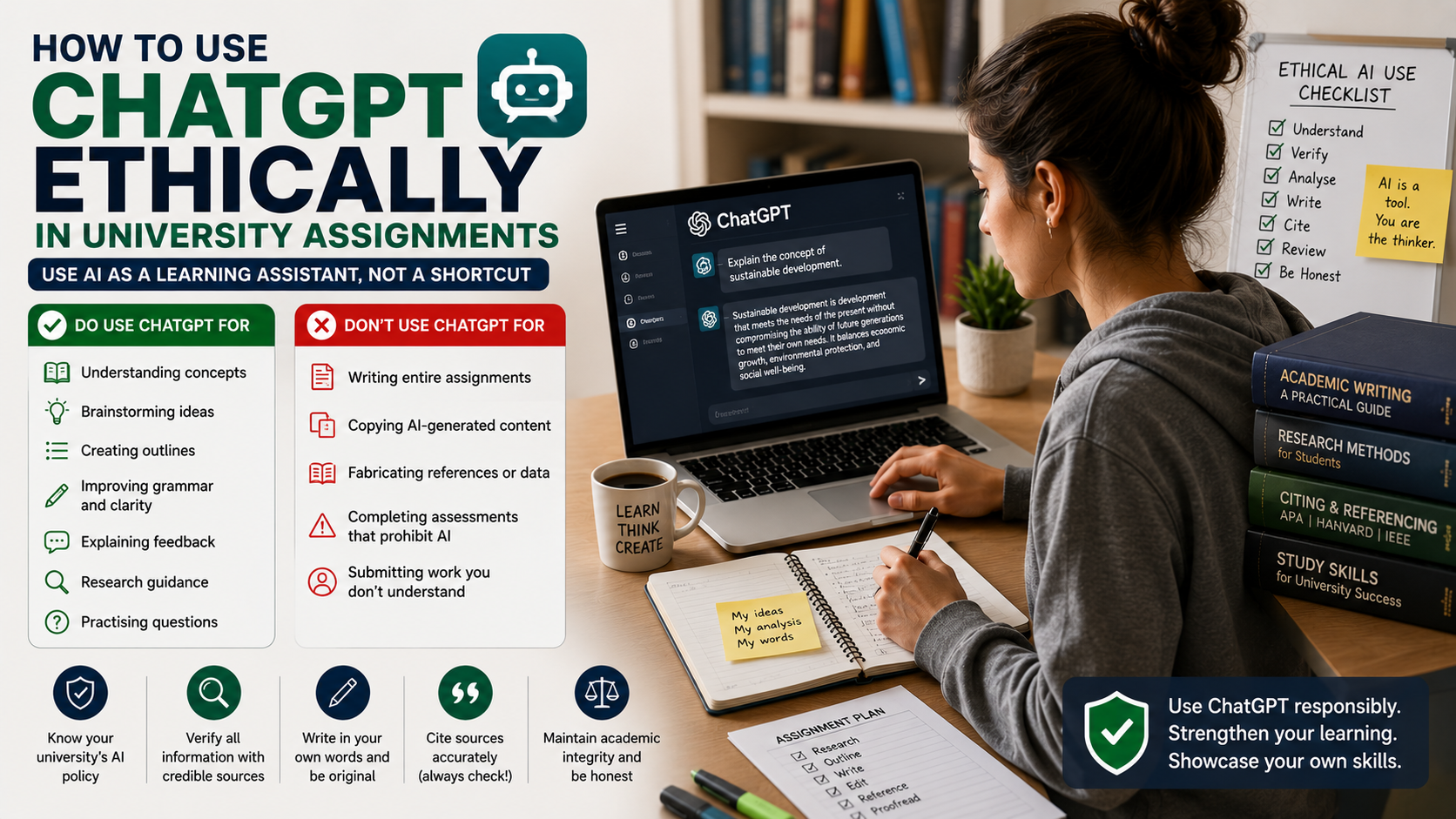
The key is to use ChatGPT ethically and responsibly. Universities increasingly allow AI as a learning aid, but they expect students to submit original work, think critically, and follow academic integrity guidelines.
This guide explains how to use ChatGPT ethically in university assignments, what you should and should not use it for, and practical tips to stay within academic rules while improving your learning.
What Does It Mean to Use ChatGPT Ethically?
Using ChatGPT ethically means using AI to support your learning rather than replace it. AI should help you understand concepts, improve your writing, and organise your ideas while ensuring the final assignment reflects your own knowledge and critical thinking.
Ethical AI use includes:
Understanding difficult concepts
Brainstorming assignment ideas
Improving grammar and clarity
Creating study notes
Generating assignment outlines
Explaining complex theories
Checking referencing formats
Receiving feedback on drafts
It does not mean submitting AI-generated work as your own or using AI to bypass the learning process.
Why Universities Care About Ethical AI Use
Universities assess not only your final answer but also your ability to:
Think critically
Conduct independent research
Evaluate evidence
Develop original arguments
Demonstrate subject knowledge
Communicate ideas effectively
If AI completes these tasks without your own contribution, the assignment may no longer demonstrate the learning outcomes your lecturer is assessing.
Many universities now publish AI usage policies explaining when AI tools are permitted and when they are not. Always read your institution's guidelines before using AI for coursework.
When You Can Use ChatGPT
ChatGPT can be an excellent study assistant when used responsibly.
Understand Difficult Concepts
Ask ChatGPT to explain topics in simple language before reading textbooks or journal articles.
Example
Explain Maslow's Hierarchy of Needs in simple terms.
Brainstorm Assignment Ideas
Use AI to generate possible approaches to a topic.
Example
Suggest research questions for a business management assignment on digital marketing.
Develop these ideas yourself rather than copying them directly.
Create an Assignment Outline
ChatGPT can help organise your ideas into a logical structure.
Example outline:
Introduction
↓
Background
↓
Literature Review
↓
Analysis
↓
Discussion
↓
Conclusion
You should still write every section independently.
Improve Grammar and Academic Style
After writing your assignment yourself, ask ChatGPT to:
Correct grammar
Improve sentence structure
Increase clarity
Remove repetition
Improve academic tone
This is similar to using proofreading software.
Understand Lecturer Feedback
If your lecturer provides comments you don't understand, ChatGPT can explain them.
Example
What does "insufficient critical analysis" mean?
Practise Exam Questions
ChatGPT can generate:
Practice questions
Quiz questions
Flashcards
Revision summaries
These are excellent revision tools.
When You Should NOT Use ChatGPT
Using AI in the following ways may breach university policies.
Writing Entire Assignments
Do not submit AI-generated assignments as your own work.
Your assignment should reflect your own thinking, analysis, and understanding.
Fabricating References
AI sometimes creates citations that do not exist.
Always verify references using trusted academic databases such as:
Google Scholar
PubMed
IEEE Xplore
JSTOR
ScienceDirect
SpringerLink
Your university library
Never include a reference you have not personally checked.
Generating Fake Data
Never use AI to invent:
Research findings
Survey results
Interview responses
Experimental data
Statistical analyses
Academic work should always be based on genuine evidence.
Completing Assessments That Prohibit AI
Some assignments specifically prohibit AI tools.
If your lecturer states AI is not allowed, do not use ChatGPT for that assessment.
Always follow your assignment instructions and institutional policy.
Best Practices for Ethical AI Use
1. Use AI as a Tutor
Ask ChatGPT to teach concepts instead of completing assignments.
Think of it as a study partner rather than a replacement for your work.
2. Verify All Information
Double-check facts, statistics, and explanations using reliable academic sources.
AI can make mistakes or provide outdated information.
3. Conduct Your Own Research
Support your arguments using:
Peer-reviewed journal articles
Academic books
Official publications
Government reports
AI should complement—not replace—academic research.
4. Write in Your Own Words
After learning from AI, close the chat and explain the concept yourself.
This improves understanding and greatly reduces the risk of plagiarism.
5. Follow Your University's AI Policy
Every university has different expectations regarding AI use.
Always review:
Academic integrity policies
Assignment instructions
Faculty guidelines
Lecturer recommendations
If you're unsure, ask your lecturer before using AI.
Can ChatGPT Replace Academic Research?
No.
ChatGPT should never replace:
Peer-reviewed journal articles
Academic books
Systematic reviews
Government publications
Professional guidelines
Primary research
University assignments should always be supported by credible academic evidence rather than AI-generated responses alone.
Should You Cite ChatGPT?
Some universities require students to disclose AI use, while others prohibit citing AI or provide specific referencing guidelines.
If your institution allows AI use, follow its policy and the required referencing style, such as APA, Harvard, or MLA.
If no guidance is available, ask your lecturer before submitting your assignment.
Common Mistakes Students Make
Avoid these common mistakes:
Copying AI-generated text directly
Using fabricated references
Relying solely on AI instead of academic research
Ignoring university AI policies
Using AI for prohibited assessments
Failing to verify facts
Submitting work you do not understand
Assuming AI is always accurate
These mistakes can lead to lower grades or academic integrity concerns.
Tips for Using ChatGPT Responsibly
Read the assignment brief carefully.
Use ChatGPT to understand concepts—not replace learning.
Verify every fact using credible academic sources.
Write original responses in your own words.
Check every reference before using it.
Follow your university's AI policy.
Proofread your work before submission.
Ensure the final assignment reflects your own understanding and analysis.
Final Thoughts
ChatGPT can be an incredibly valuable educational tool when used responsibly. It helps students understand complex concepts, improve academic writing, organise ideas, and prepare for exams. However, it should never replace independent research, critical thinking, or your own academic voice.
The most successful students use AI as a learning assistant—not as a shortcut. By verifying information, following university policies, writing in your own words, and supporting your work with credible academic sources, you can use ChatGPT ethically while maintaining academic integrity and producing high-quality university assignments.
Frequently Asked Questions
Everything you need to know about our services


