How to Handle Multiple Assignment Deadlines
Introduction
Managing one university assignment can be challenging. Managing three, four, or even five deadlines within the same week can feel overwhelming. Many students experience periods during the semester when essays, reports, presentations, group projects, and exams all compete for their attention simultaneously.
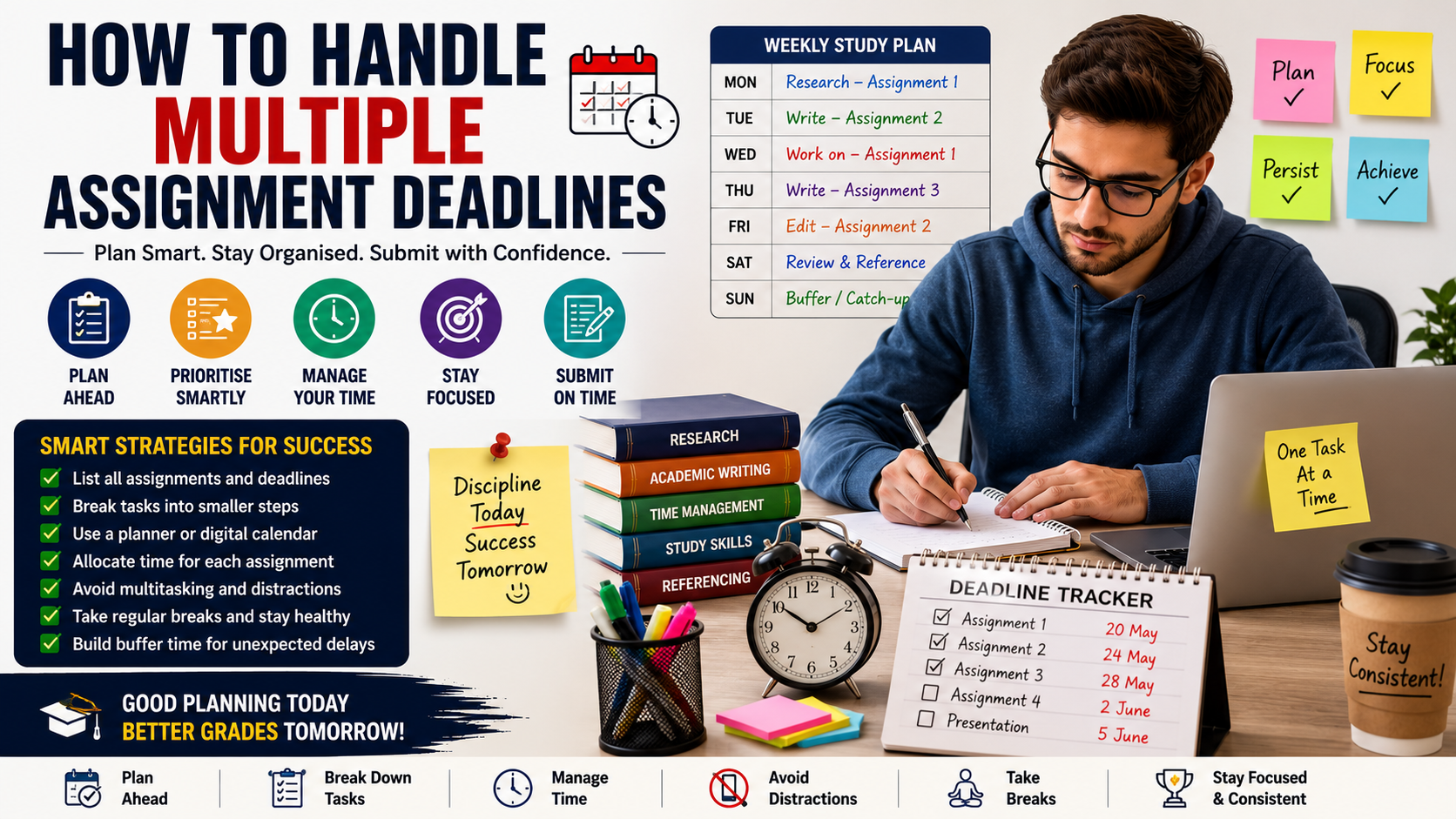
While multiple deadlines are a common part of university life, they do not have to result in missed submissions, poor grades, or unnecessary stress. With effective planning, prioritisation, and productivity strategies, you can successfully complete your assignments while maintaining a healthy work-life balance.
This guide explains practical techniques to help you stay organised, reduce pressure, and consistently meet your university deadlines.
In this guide, you'll learn:
Why Multiple Assignment Deadlines Feel Overwhelming
Many university modules schedule assessments around similar periods during the semester.
Students often face:
Essays
Case studies
Business reports
Group projects
Presentations
Exams
When several assessments overlap, students can quickly become overwhelmed without an organised study plan.
Step 1: List Every Deadline
The first step is understanding your workload.
Create a master list including:
Assignment title
Module
Submission date
Word count
Assessment weighting
Seeing all deadlines together allows you to plan effectively.
Step 2: Prioritise Your Assignments
Not every assignment requires the same amount of time.
Consider:
Submission date
Percentage of final grade
Complexity
Research requirements
Current progress
Focus first on tasks with the greatest academic impact.
Step 3: Break Large Assignments into Smaller Tasks
Avoid treating an assignment as one large task.
Instead divide it into manageable stages.
For example:
Read assignment brief
Conduct research
Create outline
Write introduction
Complete main sections
Edit
Proofread
Submit
Small milestones reduce anxiety and make progress easier to measure.
Step 4: Use a Weekly Study Planner
Allocate dedicated study sessions throughout the week.
Include:
Lectures
Work commitments
Study blocks
Breaks
Personal time
A structured timetable helps maintain consistency.
Step 5: Start Earlier Than You Think
Many students underestimate the time required for:
Academic research
Reading journal articles
Writing drafts
Referencing
Editing
Starting early creates flexibility if unexpected problems arise.
Step 6: Avoid Working on Every Assignment at Once
Constantly switching between multiple assignments reduces productivity.
Instead:
Complete one section before moving to another project.
Finish smaller tasks completely.
Return to larger assignments later.
Focused work produces better results.
Step 7: Understand the Assignment Brief
Many students waste valuable time because they misunderstand the assessment requirements.
Before researching:
Read the brief carefully.
Highlight command words.
Review the marking rubric.
Identify learning outcomes.
Clear understanding saves considerable time later.
Step 8: Use Time Blocking
Assign specific periods for different activities.
Example:
Monday
Research Assignment A
Tuesday
Draft Assignment B
Wednesday
Edit Assignment A
Thursday
Research Assignment C
Friday
Proofreading
Dedicated time blocks improve concentration.
Step 9: Eliminate Distractions
Common distractions include:
Social media
Mobile phones
Streaming services
Constant notifications
Study in distraction-free environments whenever possible.
Focused study sessions are significantly more productive.
Step 10: Apply the Pomodoro Technique
One effective productivity method involves:
25 minutes focused study
5-minute break
After four sessions, take a longer break.
This approach reduces mental fatigue during busy assessment periods.
Step 11: Reuse Organisational Systems
Instead of creating new documents every time:
Prepare templates for:
Assignment planning
Reference lists
Note-taking
Weekly schedules
Standard systems save time throughout the semester.
Step 12: Keep Research Organised
Create folders for each assignment.
Store:
Journal articles
Notes
PDFs
References
Drafts
Well-organised research prevents wasted time searching for sources later.
Step 13: Don't Aim for Perfection on the First Draft
Many students spend too much time perfecting early paragraphs.
Instead:
Complete the first draft.
Edit later.
Progress is more important than perfection.
Step 14: Build Buffer Time
Unexpected events happen.
Examples include:
Illness
Technical issues
Work commitments
Family emergencies
Aim to complete assignments at least one or two days before submission.
Step 15: Take Regular Breaks
Studying continuously for hours reduces concentration.
Short breaks improve:
Focus
Productivity
Memory
Motivation
Looking after your wellbeing improves academic performance.
Tools That Help Manage Deadlines
Useful planning tools include:
Google Calendar
Microsoft Outlook
Notion
Trello
Todoist
Microsoft OneNote
Choose one system and use it consistently.
Sample Assignment Timeline
Four weeks before submission
Read assignment brief
Begin research
Three weeks before
Create outline
Continue reading
Two weeks before
Write first draft
One week before
Edit
Improve analysis
Two days before
Proofread
Final referencing
Submission day
Submit confidently
Common Mistakes Students Make
Students often:
Start too late.
Ignore assignment weightings.
Multitask constantly.
Skip planning.
Underestimate editing time.
Leave referencing until the end.
Avoiding these mistakes significantly reduces deadline pressure.
How to Reduce Deadline Stress
Reduce stress by:
Planning early
Sleeping well
Taking regular breaks
Asking lecturers questions early
Working consistently each day
Small daily progress prevents last-minute panic.
Assignment Deadline Checklist
Before each week:
✔ Review upcoming deadlines.
✔ Prioritise assignments.
✔ Schedule study sessions.
✔ Break tasks into milestones.
✔ Organise research.
✔ Build buffer time.
✔ Review progress regularly.
Key Takeaways
Multiple deadlines require planning rather than panic.
Prioritise assignments based on importance and deadlines.
Break large projects into smaller tasks.
Use structured study schedules.
Start assignments early.
Avoid multitasking.
Protect your wellbeing during busy assessment periods.
Consistency is the key to academic success.
Conclusion
Managing multiple assignment deadlines is one of the most valuable academic skills university students can develop. Rather than relying on last-minute efforts, successful students use structured planning, effective prioritisation, and consistent daily progress to stay ahead of deadlines.
With the right time management techniques, even the busiest assessment periods become far more manageable. By planning ahead, organising your workload, and maintaining healthy study habits, you can submit higher-quality assignments while significantly reducing stress throughout the semester.
Frequently Asked Questions
Everything you need to know about our services


