What Happens If You Submit an Assignment Late in a UK University?
Missing an assignment deadline can be stressful, especially if you're studying at a UK university. Whether you were dealing with illness, technical issues, personal circumstances, or simply poor time management, submitting coursework late can have academic consequences. However, the exact outcome depends on your university's regulations and the reason for the delay.
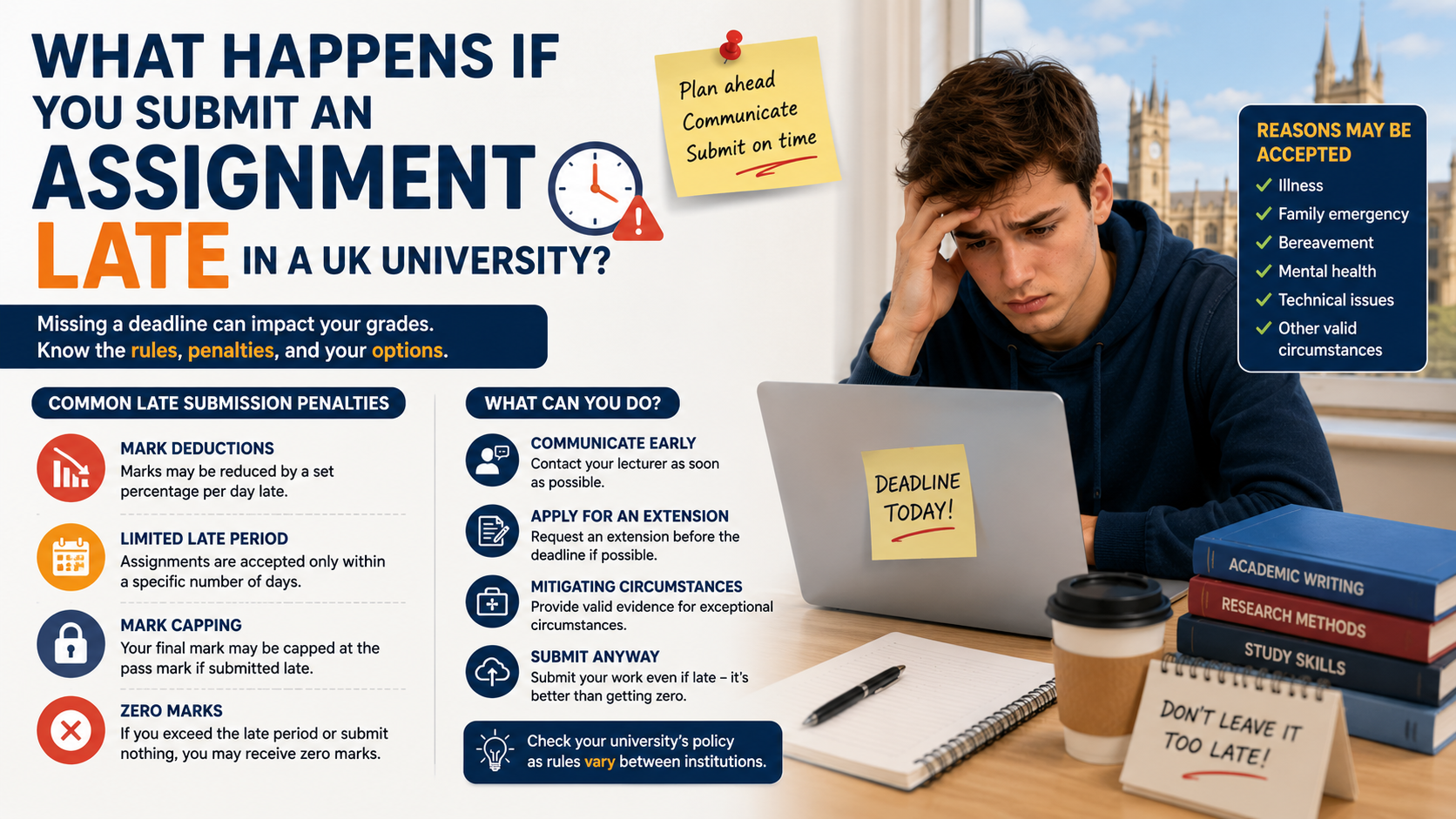
In this guide, we'll explain what happens if you submit an assignment late in a UK university, the penalties you may face, how late submission policies work, and what you can do to minimise the impact on your grades.
Do UK Universities Accept Late Assignments?
Yes, many UK universities accept late assignments, but they usually apply penalties unless you have an approved extension or mitigating circumstances.
Every university has its own academic regulations, but most institutions publish clear policies covering:
Late submission deadlines
Daily grade penalties
Maximum accepted delay
Extensions
Mitigating circumstances
Non-submission consequences
Before assuming your assignment will be accepted, always check your university's assessment handbook or module guide.
Common Late Submission Penalties in UK Universities
Although policies vary between institutions, these are some of the most common penalties students encounter.
1. Daily Mark Deduction
Many UK universities deduct a percentage of your marks for each day your assignment is late.
For example:
5% deduction per day
10 marks deducted after the deadline
Fixed percentage reductions
The deduction usually continues until the maximum late submission period expires.
2. Automatic Fail After a Certain Period
Some universities allow submissions for only a limited number of days after the deadline.
Common examples include:
Up to 5 working days late
Up to 7 calendar days late
One-week grace period
After this period, the assignment may receive a mark of zero.
3. Mark Capping
If your assignment is accepted after an approved resubmission or referral, your final mark may be capped at the module pass mark.
For example:
Work deserving 72%
Final recorded mark: 40% (pass mark)
This policy varies by institution.
4. Zero Marks for Non-Submission
If no assignment is submitted and no extension has been approved, the assessment may receive zero marks.
This can significantly affect your overall module grade.
What If You Have a Valid Reason?
UK universities recognise that unexpected situations can affect students.
Common accepted reasons include:
Illness
Hospitalisation
Family emergencies
Bereavement
Mental health difficulties
Technical failures (where evidence exists)
Disability-related circumstances
In these situations, students may apply for:
Assignment extensions
Mitigating circumstances
Deferral of assessment
Supporting evidence is usually required.
What Are Mitigating Circumstances?
Mitigating circumstances are unexpected events that seriously affect your ability to complete academic work on time.
Examples include:
Medical certificates
Hospital records
GP letters
Death certificates
Police reports
Official supporting documents
If approved, your university may:
Remove late penalties
Grant an extension
Allow a deferred assessment
Permit a first attempt at a later date
Can You Request an Extension?
Yes. Most UK universities allow students to request an extension before the submission deadline.
Extensions are often granted for:
Illness
Personal emergencies
Caring responsibilities
Disability support plans
Exceptional circumstances
Applying early usually improves your chances of approval.
Will a Late Submission Affect Your Degree?
Not necessarily.
The impact depends on:
Assignment weighting
Module pass requirements
Overall academic performance
Number of late submissions
University regulations
If the assignment carries only a small percentage of the module, strong performance elsewhere may help you recover.
How to Reduce the Impact of a Late Assignment
If you realise you'll miss the deadline, act quickly.
Contact Your Lecturer
Inform your tutor or module leader before the deadline whenever possible.
Apply for an Extension
Don't wait until after the deadline has passed.
Gather Supporting Evidence
Medical notes or official documents strengthen your request.
Submit Your Work Anyway
Even if penalties apply, submitting late is often better than not submitting at all.
Learn From the Experience
Improve your planning by:
Starting assignments earlier
Breaking work into smaller tasks
Using calendars and reminders
Allowing time for unexpected delays
Tips to Avoid Late Submission in Future
Read assignment briefs early.
Create a realistic study timetable.
Set personal deadlines before official deadlines.
Save your work in multiple locations.
Back up files using cloud storage.
Avoid leaving submissions until the final hour.
Seek academic support if you're struggling.
Good time management can significantly reduce academic stress.
Final Thoughts
Submitting an assignment late at a UK university doesn't always mean automatic failure, but it can lead to mark deductions, capped grades, or even zero marks depending on your institution's policies. The best approach is to understand your university's regulations, communicate with your lecturers, and apply for extensions or mitigating circumstances when appropriate. Acting quickly and submitting your work, even if it's late, is usually far better than submitting nothing at all.
By planning ahead and using the support services available, you can minimise the impact of late submissions and stay on track with your academic goals.
Frequently Asked Questions
Everything you need to know about our services


