Can I Pass My Module If I Fail One Assignment?
Failing an assignment can be discouraging, especially if you're worried about whether it means you'll fail the entire module. The good news is that failing one assignment does not automatically mean you'll fail the module. In many colleges and universities, your final module grade is based on multiple assessments, such as assignments, coursework, presentations, quizzes, practical work, and final exams.
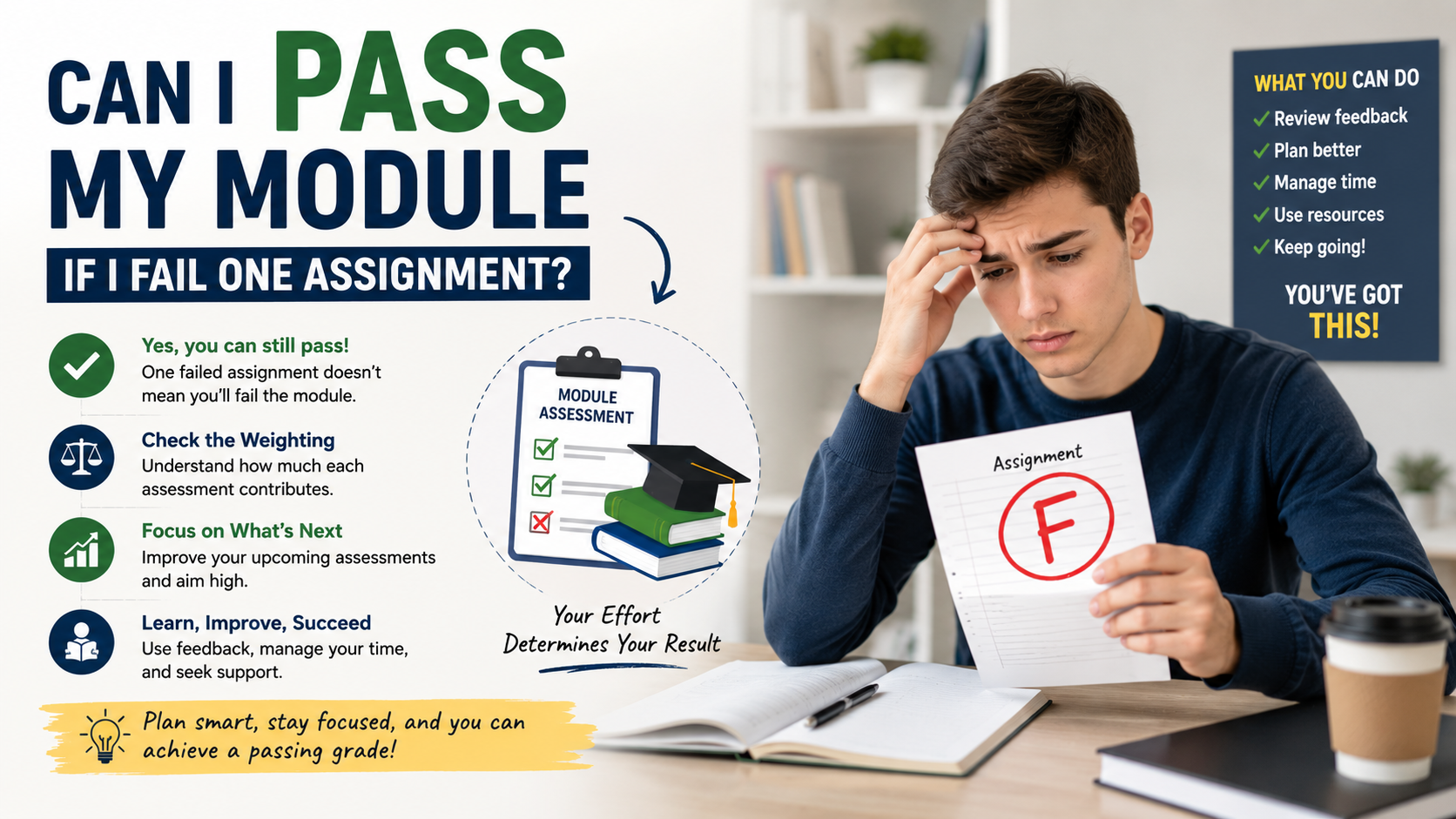
Whether you can still pass depends on your institution's grading policy, the weighting of the failed assignment, and your performance in the remaining assessments. This guide explains what happens when you fail one assignment and the steps you can take to stay on track.
Can You Pass a Module After Failing One Assignment?
Yes, in many cases you can.
Most modules use a weighted grading system, where different assessments contribute varying percentages to your final mark. For example:
Assignment 1 – 20%
Assignment 2 – 30%
Final Exam – 50%
If you fail Assignment 1 but perform well in Assignment 2 and the final exam, you may still achieve an overall passing grade.
However, every university has different regulations, so it's important to check your course handbook or module guide.
What Determines Whether You Pass?
Several factors influence your final result.
1. Assessment Weighting
Not every assignment carries the same value.
Failing an assignment worth 10% has much less impact than failing coursework worth 50%.
Always check how much each assessment contributes to your final grade.
2. Overall Module Grade
Many universities calculate your final mark by combining all assessments.
For example:
Assignment 1: 35% (Failed)
Assignment 2: 68%
Final Exam: 72%
The combined average may still exceed the module pass mark.
3. Minimum Assessment Requirements
Some universities require students to:
Pass every assessment individually
Achieve a minimum mark in exams
Complete mandatory practical work
Meet professional accreditation standards
If these rules apply, failing one assignment could affect your module result even if your overall average is high.
4. Compensation Policies
Some institutions offer compensation, meaning a failed assessment can be offset by strong performance elsewhere if your overall module average meets specific requirements.
Compensation rules vary by university.
Common Reasons Students Fail an Assignment
Understanding why you failed helps prevent future mistakes.
Common reasons include:
Missing the submission deadline
Poor time management
Weak research
Not following assignment instructions
Referencing errors
Lack of critical analysis
Poor academic writing
Plagiarism or academic misconduct
Learning from these mistakes is the first step toward improvement.
What Should You Do After Failing?
Instead of panicking, focus on what you can control.
Review Your Feedback
Read your instructor's comments carefully.
Identify:
Where marks were lost
Which assessment criteria weren't met
How your work can improve
Calculate Your Remaining Grades
Work out how many marks you need in future assessments to pass the module.
Knowing your target helps you focus your efforts.
Speak With Your Instructor
If the feedback isn't clear, arrange a meeting.
Ask questions like:
Which areas need improvement?
What mistakes should I avoid?
How can I achieve a higher grade next time?
Improve Your Study Habits
Successful students often:
Start assignments early
Create study schedules
Break large tasks into smaller goals
Proofread before submitting
Seek feedback before deadlines
Small improvements can make a significant difference.
Use Academic Support Services
Most universities provide free support, including:
Writing centres
Study skills workshops
Referencing guidance
Academic tutoring
Learning support services
Taking advantage of these resources can improve future performance.
Can You Resubmit a Failed Assignment?
Sometimes.
Many institutions allow:
Resubmissions
Supplementary assessments
Referral assignments
Resit opportunities
These options depend on your university's regulations and the specific module.
Always check your student handbook or contact your instructor.
How to Avoid Failing Future Assignments
Use these practical strategies:
Read the assignment brief carefully.
Understand the marking rubric.
Start researching early.
Manage your time effectively.
Use reliable academic sources.
Reference correctly.
Proofread your work.
Ask for feedback before submission.
Consistent preparation usually leads to better results.
Final Thoughts
Failing one assignment is disappointing, but it rarely means you've failed the entire module. Most students still have opportunities to improve their overall grade through remaining coursework, exams, or resubmission options.
The most important step is to understand why you failed, learn from the feedback, and adjust your approach moving forward. Every assignment provides valuable learning opportunities, and many successful graduates have recovered from early setbacks.
Stay focused, seek support when needed, and remember that one poor result does not define your academic potential.
Frequently Asked Questions
Everything you need to know about our services

