I Failed My Assignment – What Should I Do Next?
Failing an assignment can feel discouraging, especially if you spent hours researching, writing, and editing your work. Many students worry that one poor grade will ruin their academic record or lower their confidence. The good news is that failing a single assignment doesn't define your abilities or determine your future success.
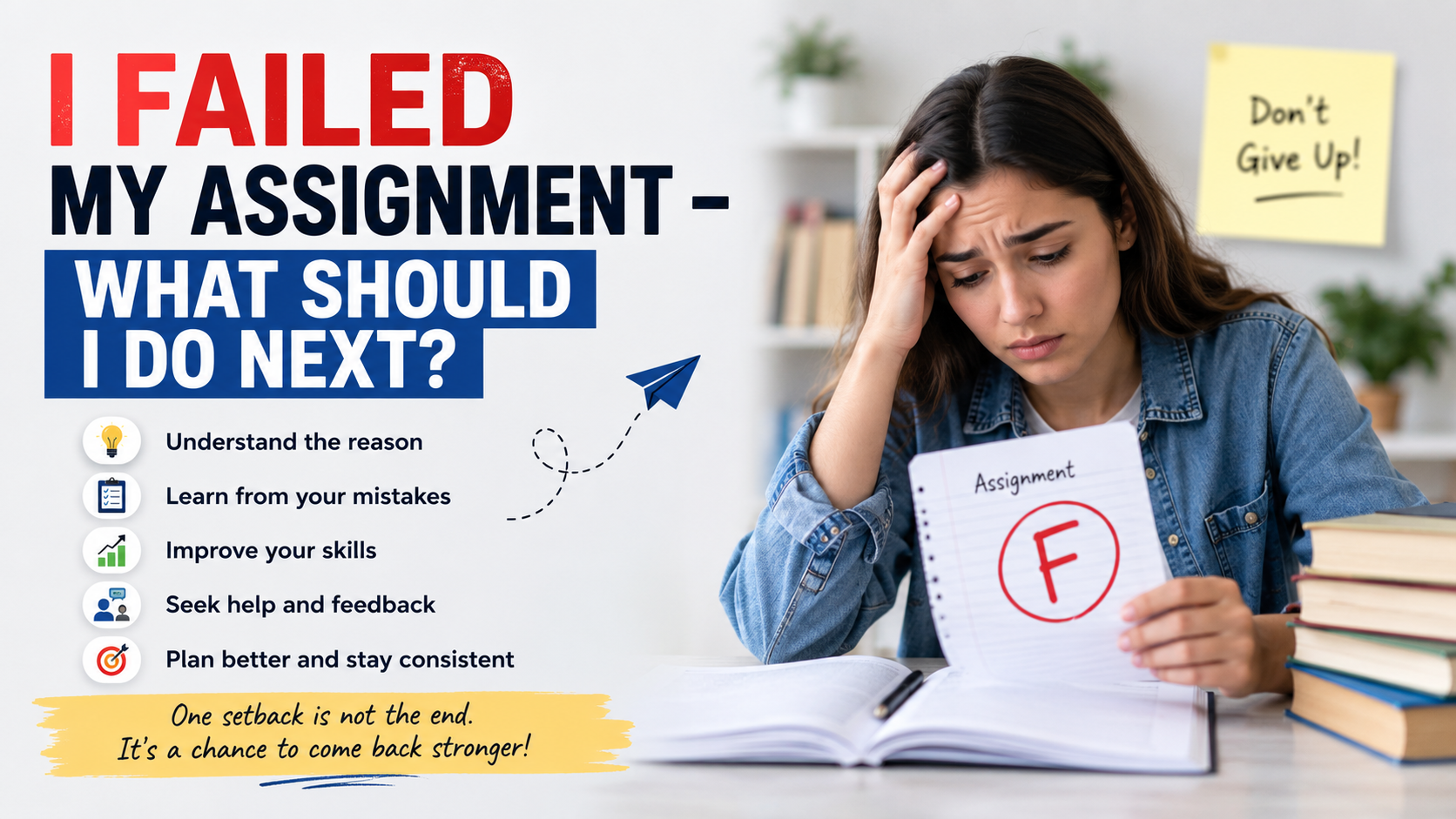
Instead of dwelling on the disappointment, treat the experience as an opportunity to learn and improve. Here's what you should do next if you've failed an assignment.
1. Stay Calm and Don't Panic
Your first reaction might be frustration, embarrassment, or anxiety. These feelings are completely normal. However, making decisions while emotional can lead to unnecessary stress.
Take a short break, clear your mind, and remember that even high-achieving students occasionally fail assignments. One setback is not the end of your academic journey.
2. Understand Why You Failed
Before planning your next steps, identify the reason behind the low grade. Read your instructor's comments carefully and compare them with the assignment requirements.
Common reasons include:
Missing the assignment guidelines
Poor structure or organization
Weak research or evidence
Referencing errors
Grammar and spelling mistakes
Late submission
Not answering the question completely
Understanding the cause helps you avoid making the same mistakes again.
3. Review the Marking Rubric
Most assignments are graded using a marking rubric. This document explains how marks are allocated for areas such as research, analysis, presentation, originality, and referencing.
Compare your assignment with the rubric to identify exactly where you lost marks.
4. Ask Your Instructor for Feedback
If the written comments aren't clear, schedule a meeting or send a polite email asking for additional feedback.
Questions you can ask include:
Which areas need the most improvement?
What could I have done differently?
Can you recommend resources to improve my writing?
How can I perform better in future assignments?
Constructive feedback is one of the fastest ways to improve your academic skills.
5. Learn From Your Mistakes
Rather than focusing only on the grade, focus on the lessons.
Ask yourself:
Did I start too late?
Did I misunderstand the question?
Was my research sufficient?
Did I proofread before submitting?
Did I use reliable academic sources?
Answering these questions honestly will help you develop stronger study habits.
6. Improve Your Time Management
Many assignment problems happen because students leave everything until the last minute.
A better approach is to divide the assignment into smaller tasks:
Understand the topic
Conduct research
Create an outline
Write the first draft
Edit and proofread
Check formatting and references
Submit before the deadline
Working in stages reduces stress and improves the quality of your work.
7. Strengthen Your Academic Writing Skills
Good academic writing is a skill that develops with practice.
Focus on improving:
Clear introductions and conclusions
Logical paragraph structure
Critical analysis
Evidence-based arguments
Academic vocabulary
Proper referencing
The more assignments you write, the more confident you'll become.
8. Use Available Academic Support
Most universities provide free academic support services such as:
Writing centers
Library research assistance
Study skills workshops
Referencing guides
Peer tutoring
Taking advantage of these resources can significantly improve your future grades.
9. Prepare Better for the Next Assignment
Don't let one failure affect your motivation.
Before starting your next assignment:
Read the instructions carefully.
Understand the marking criteria.
Plan your schedule.
Use credible academic sources.
Proofread multiple times.
Check plagiarism and citations.
Submit before the deadline.
Consistency is far more important than perfection.
10. Remember That Failure Doesn't Define You
Many successful professionals, researchers, and graduates have experienced academic setbacks. What separates successful students isn't that they never fail—it's that they learn from their mistakes and continue improving.
Every assignment is a chance to become a better researcher, writer, and critical thinker.
Final Thoughts
Failing an assignment is disappointing, but it doesn't mean you're incapable of succeeding. By understanding what went wrong, seeking constructive feedback, improving your study habits, and preparing more effectively, you can turn a setback into valuable learning.
Academic success is built through continuous improvement, not perfection. Use this experience as motivation, apply the lessons you've learned, and approach your next assignment with greater confidence and preparation.
Frequently Asked Questions
Everything you need to know about our services
