How to Write a Computer Science Assignment (2026 Guide)
Writing a computer science assignment requires more than simply writing code. Universities expect students to demonstrate problem-solving skills, apply computing concepts, develop efficient algorithms, analyse technical solutions, and support their work with credible academic and technical sources.
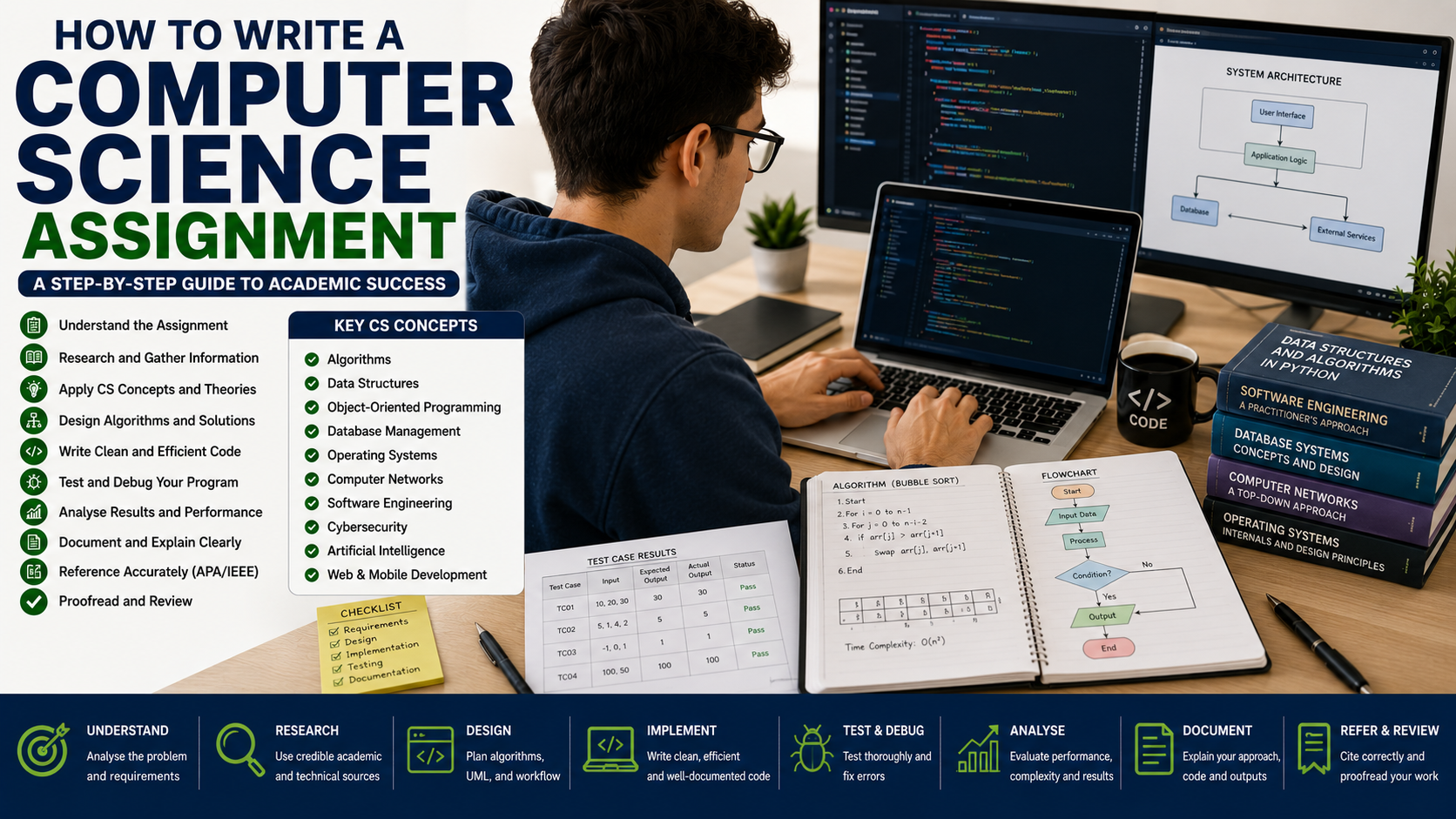
Whether you're studying Computer Science in Australia, the UK, Canada, or elsewhere, this guide explains how to write a high-quality computer science assignment that meets university standards and helps you achieve higher grades.
What Is a Computer Science Assignment?
A computer science assignment is an academic assessment designed to evaluate your understanding of computing principles, programming, software development, algorithms, databases, networking, cybersecurity, artificial intelligence, and system design.
Depending on your course, you may be asked to:
Develop a software application
Write and explain programming code
Design algorithms
Analyse data structures
Create database systems
Build web or mobile applications
Evaluate cybersecurity solutions
Complete software engineering case studies
Develop machine learning models
Unlike many essay-based subjects, computer science assignments often combine practical programming with technical explanations and critical evaluation.
Why Computer Science Assignments Matter
Computer science assignments help students develop practical technical skills that employers value.
They assess your ability to:
Solve computational problems
Write efficient code
Design algorithms
Apply software engineering principles
Analyse technical solutions
Debug programs
Think logically
Communicate technical concepts clearly
These skills prepare students for careers in software development, artificial intelligence, cybersecurity, cloud computing, data science, and systems engineering.
Step 1: Understand the Assignment Question
Before writing code or conducting research, carefully read the assignment instructions.
Ask yourself:
What problem am I solving?
Which programming language should I use?
Are there any software or framework requirements?
Is a written report required alongside the code?
What is the required word count?
Which referencing style should I use?
What are the assessment criteria?
Pay close attention to command words.
Command Word | Meaning |
|---|---|
Discuss | Present different technical viewpoints using evidence |
Analyse | Break down the problem and evaluate each component |
Evaluate | Assess strengths, weaknesses, and performance |
Compare | Explain similarities and differences between technologies |
Explain | Describe concepts clearly with examples |
Critically Assess | Provide balanced judgement supported by evidence |
Understanding these keywords helps ensure your assignment answers exactly what your lecturer expects.
Step 2: Conduct Thorough Research
Strong computer science assignments are supported by reliable technical and academic sources.
Use trusted resources such as:
Google Scholar
IEEE Xplore
ACM Digital Library
SpringerLink
ScienceDirect
Official Programming Language Documentation
GitHub Documentation
Oracle Documentation
Microsoft Learn
Mozilla Developer Network (MDN)
Support your work using:
Peer-reviewed journal articles
Conference papers
Technical books
Official documentation
Industry white papers
Technical standards
Avoid relying solely on blogs, discussion forums, or AI-generated code without verification.
Step 3: Plan Your Assignment
Create a structured plan before coding or writing.
Example:
Problem Statement
↓
Requirements Analysis
↓
Research
↓
System Design
↓
Algorithm Design
↓
Implementation
↓
Testing
↓
Evaluation
↓
Conclusion
Planning helps reduce coding errors and produces a well-organised assignment.
Step 4: Write a Strong Introduction
A strong introduction should:
Introduce the computing problem
Explain its importance
State the assignment objectives
Provide technical background
Outline the report structure
Example:
This assignment develops a secure inventory management system using object-oriented programming principles and evaluates its performance based on software engineering best practices.
Step 5: Apply Computer Science Concepts
Support your assignment using recognised computer science principles.
Common topics include:
Algorithms
Data Structures
Object-Oriented Programming (OOP)
Software Engineering
Database Management Systems
Operating Systems
Computer Networks
Cybersecurity
Artificial Intelligence
Machine Learning
Cloud Computing
Web Development
Mobile App Development
Explain why each concept or technology is appropriate for solving the problem.
Step 6: Present Code and Technical Solutions
If your assignment includes programming:
Write clean, readable code.
Use meaningful variable and function names.
Add comments where appropriate.
Follow coding standards.
Include screenshots or outputs if required.
Explain how the code works rather than simply presenting it.
Where applicable, include:
Flowcharts
UML Diagrams
ER Diagrams
Architecture Diagrams
Algorithms
Pseudocode
Technical explanations should accompany every major implementation decision.
Step 7: Demonstrate Critical Analysis
High-scoring computer science assignments do more than produce working code.
Critically evaluate:
Algorithm efficiency
Time and space complexity
Security considerations
Scalability
Software performance
Design decisions
Alternative approaches
Limitations of the solution
Support your evaluation with academic literature and technical evidence.
Step 8: Reference Correctly
Computer science assignments commonly require:
APA 7th Edition
Harvard Referencing
IEEE Referencing (for some computing courses)
Reference:
Journal articles
Conference papers
Technical books
Official documentation
Standards
Research papers
Always cite external code snippets, libraries, frameworks, datasets, and documentation where required.
Step 9: Test and Proofread Before Submission
Before submitting:
✔ Test all code thoroughly
✔ Remove bugs and syntax errors
✔ Verify outputs
✔ Review screenshots
✔ Check formatting
✔ Review references
✔ Check grammar
✔ Run plagiarism and similarity checks where appropriate
Common Mistakes Students Make
Avoid these common mistakes:
Writing code without planning
Ignoring assignment requirements
Poor documentation
Weak technical explanations
Not testing the software
Copying code without citation
Weak critical analysis
Incorrect referencing
These mistakes often lead to lower marks.
Tips for Achieving High Marks
Read the assignment brief carefully.
Research before coding.
Write clean and well-documented code.
Apply recognised software engineering principles.
Explain every technical decision.
Test your solution thoroughly.
Use diagrams where appropriate.
Reference all external sources correctly.
Proofread both your report and code before submission.
Final Thoughts
Writing a computer science assignment requires careful planning, technical knowledge, strong problem-solving skills, and clear communication. By understanding the assignment brief, researching authoritative technical sources, applying recognised computer science principles, and explaining your implementation decisions, you can produce a professional assignment that meets university expectations.
Focus on solving the problem logically, writing clean and efficient code, testing your solution thoroughly, and supporting your work with credible academic evidence. Combining practical programming skills with strong technical writing will help you achieve higher grades and prepare you for a successful career in the computing industry.
Frequently Asked Questions
Everything you need to know about our services
Related Posts

MBA Assignment Writing Guide: Structure, Tips & Examples

How to Write a Law Assignment Using OSCOLA (2026 Guide)
