How to Recover From a Low Assignment Grade
Getting a low assignment grade can feel discouraging, especially after investing hours of research and writing. However, one poor result doesn't define your academic ability or determine your future success. Every semester, thousands of university students recover from disappointing grades by learning from their mistakes and improving their study strategies.
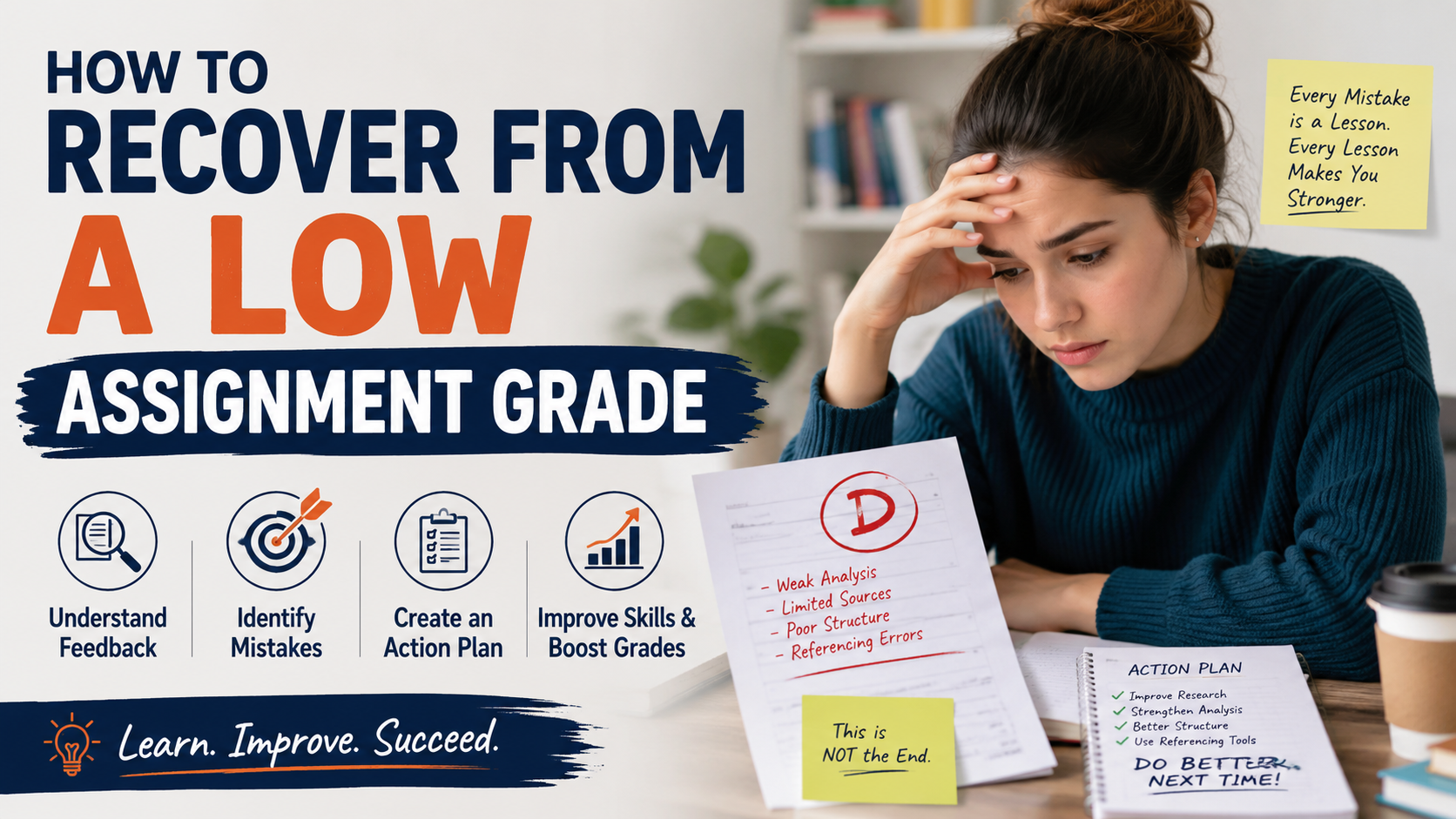
Instead of viewing a low grade as a failure, treat it as valuable feedback. Understanding what went wrong and taking practical steps to improve can help you perform significantly better in future assessments.
In this guide, you'll learn how to recover from a low assignment grade, rebuild your confidence, and create a clear improvement plan for higher marks.
Accept the Grade Without Panicking
The first reaction to a poor grade is often frustration or disappointment. While these feelings are normal, avoid making emotional decisions such as giving up on the course or assuming you'll never improve.
Remember:
-
One assignment rarely determines your final course grade.
-
Universities assess progress across multiple assessments.
-
Every assignment provides opportunities to improve.
Stay calm and focus on what you can control moving forward.
Carefully Read Your Lecturer's Feedback
Many students only look at the final mark and ignore the comments. The feedback is actually the most valuable part of the assessment.
Look for recurring comments such as:
-
Weak critical analysis
-
Limited academic sources
-
Poor structure
-
Referencing mistakes
-
Lack of evidence
-
Weak conclusions
-
Unclear arguments
Highlight every suggestion your lecturer has made.
These comments provide a roadmap for improvement.
Understand Where You Lost Marks
Open the grading rubric and compare it with your assignment.
Ask yourself:
-
Did you answer every part of the question?
-
Was your research sufficient?
-
Did you support arguments with evidence?
-
Was the structure logical?
-
Were references formatted correctly?
Identifying exactly where marks were lost helps prevent repeating the same mistakes.
Meet With Your Lecturer or Tutor
If the feedback isn't clear, arrange a meeting during office hours.
Prepare questions such as:
-
Which sections needed stronger analysis?
-
How could I improve my evidence?
-
What would distinguish this assignment as a higher-grade submission?
-
Can you recommend additional resources?
Most lecturers appreciate students who genuinely want to improve.
Turn Feedback Into an Action Plan
Don't simply read your feedback—convert it into practical, measurable goals that you can apply in your next assignment. Having a clear improvement plan helps you develop stronger academic skills and achieve better results over time.
| Lecturer Feedback | Practical Action |
| Weak analysis | Compare multiple academic viewpoints in each section. |
| Limited research | Include more peer-reviewed journal articles to strengthen your arguments. |
| Poor referencing | Use citation management software to ensure accurate referencing. |
| Weak conclusion | Summarise key findings without introducing new ideas. |
📌 Success Tip: Turn every piece of lecturer feedback into one specific action before beginning your next assignment. Setting measurable goals makes it easier to monitor progress, avoid repeating mistakes, and consistently improve your grades.
Strengthen Your Academic Skills
Low grades often result from one or two weak academic skills rather than a lack of intelligence.
Focus on improving areas like:
Academic Research
Learn how to find:
-
Peer-reviewed journals
-
Government publications
-
Academic books
-
Reliable databases
Better sources lead to stronger assignments.
Critical Analysis
Instead of describing information, analyse it.
Compare:
-
Different theories
-
Opposing viewpoints
-
Research findings
-
Strengths and weaknesses
Critical thinking is one of the biggest factors separating average assignments from high-distinction work.
Academic Writing
Improve your:
-
Topic sentences
-
Paragraph structure
-
Logical flow
-
Academic tone
-
Evidence integration
Well-organised writing makes arguments easier to follow.
Referencing
Incorrect citations can cost valuable marks.
Double-check:
-
In-text citations
-
Reference lists
-
Formatting style
-
Missing sources
Using reference management tools can greatly reduce citation errors.
Start Your Next Assignment Earlier
Many low grades result from rushed submissions.
Create a simple schedule:
-
Week 1: Understand the question
-
Week 2: Research
-
Week 3: Create an outline
-
Week 4: Write the first draft
-
Week 5: Edit and proofread
Starting early allows more time for revisions.
Proofread Before Submitting
Even strong assignments lose marks due to avoidable mistakes.
Check for:
-
Grammar
-
Spelling
-
Formatting
-
Missing citations
-
Inconsistent headings
-
Word count
Reading your work aloud can help identify awkward sentences.
Use University Academic Support Services
Most universities offer free academic support, including:
-
Writing centres
-
Study skills workshops
-
Referencing support
-
Library research assistance
-
Peer mentoring
-
Academic success advisors
These services are designed to help students improve their academic performance.
Track Your Progress
Create a simple improvement journal after each assignment.
Record:
-
Grade received
-
Lecturer feedback
-
Mistakes made
-
Skills to improve
-
Goals for the next assignment
Over time, you'll notice recurring patterns and measurable progress.
Don't Let One Grade Affect Your Confidence
Many top-performing graduates have received disappointing grades during university.
Success comes from learning, adapting, and continuously improving—not from achieving perfect marks every time.
Every assignment is an opportunity to become a stronger researcher, writer, and critical thinker.
Common Mistakes to Avoid
Avoid these common reactions after receiving a poor grade:
-
Ignoring lecturer feedback
-
Comparing yourself with classmates
-
Starting the next assignment too late
-
Using weak or unreliable sources
-
Repeating the same writing mistakes
-
Focusing only on the grade instead of the feedback
Learning from mistakes is far more valuable than dwelling on them.
Final Thoughts
A low assignment grade is not the end of your academic journey—it is an opportunity to improve. By carefully reviewing feedback, strengthening your academic skills, seeking support from lecturers, and planning future assignments more effectively, you can significantly increase your grades over time.
The most successful students aren't those who never make mistakes. They're the ones who learn from every assignment and apply those lessons to the next challenge. Treat every piece of feedback as a stepping stone toward academic success, and you'll build the confidence and skills needed to achieve consistently better results.
Frequently Asked Questions
Everything you need to know about our services


