Last-Minute Assignment Tips: Finish Faster & Score Better
Introduction
Assignments always seem manageable when they're first announced, but before you know it, the deadline is only a few hours—or even a day—away. Whether you've been busy with exams, work, personal commitments, or simply underestimated the workload, leaving an assignment until the last minute doesn't have to end in disaster.
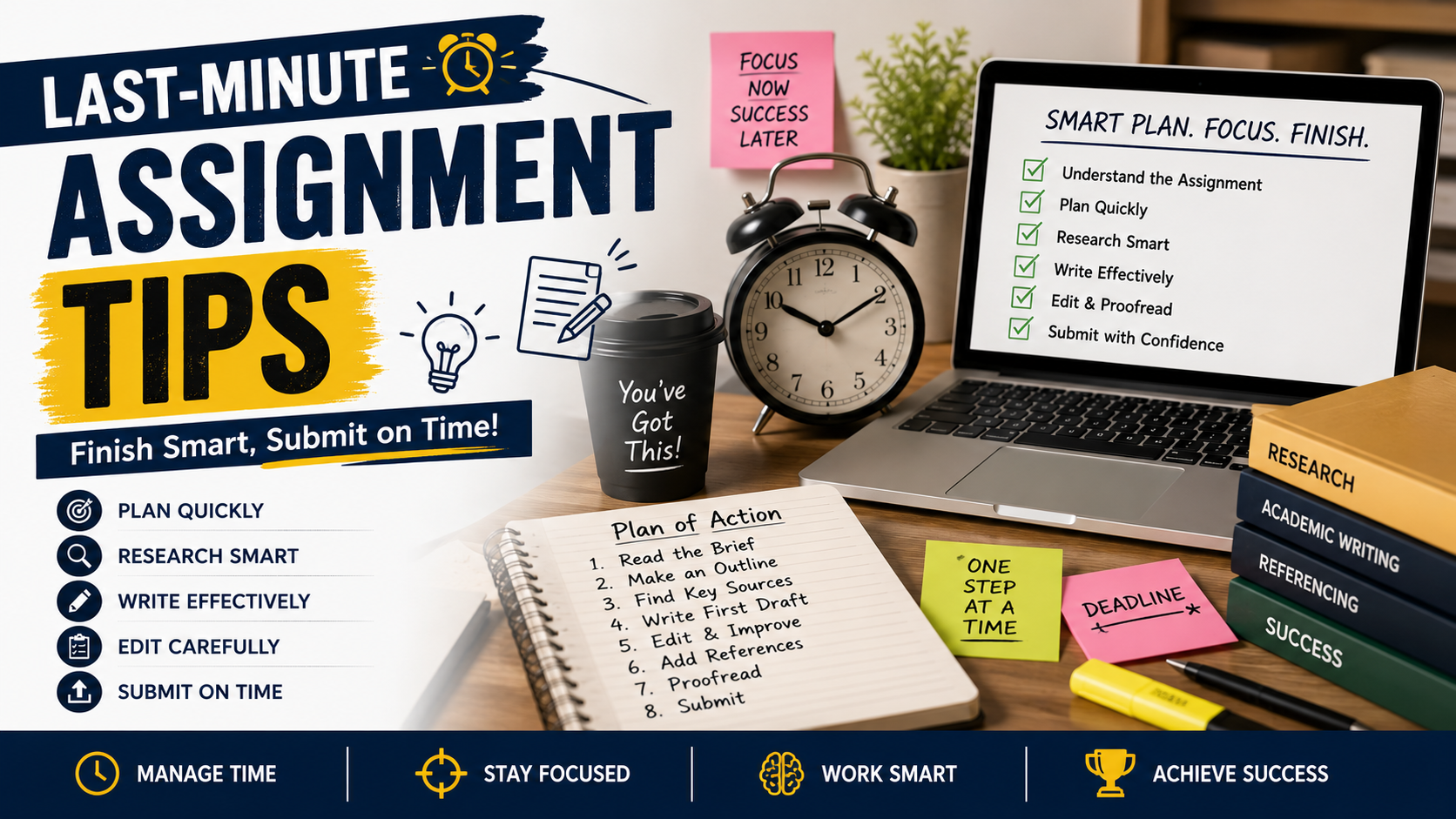
The key is to stay focused, work strategically, and avoid wasting precious time. In this guide, you'll discover practical last-minute assignment tips that can help you complete quality work quickly while reducing stress.
Why Students Leave Assignments Until the Last Minute
Procrastination is one of the biggest challenges students face. Some common reasons include:
Feeling overwhelmed by the assignment requirements
Poor time management
Multiple deadlines occurring simultaneously
Perfectionism leading to delayed progress
Lack of motivation or interest in the topic
Underestimating the time required
Recognizing why you're behind is the first step toward solving the problem.
1. Don't Panic
The worst thing you can do is waste valuable time stressing about the deadline.
Instead:
Take a deep breath.
Accept your situation.
Focus on what you can complete rather than what you should have done earlier.
A calm mind works much faster than a panicked one.
2. Understand the Assignment Brief
Before writing anything, carefully read the assignment instructions.
Pay attention to:
Word count
Required referencing style
Learning objectives
Submission guidelines
Marking criteria
Understanding exactly what your lecturer expects can save hours of unnecessary work.
3. Break the Task into Smaller Sections
Instead of thinking about writing a 2,500-word assignment, divide it into manageable tasks.
Example:
Research (30 minutes)
Create an outline (15 minutes)
Introduction
Main body
Conclusion
References
Proofreading
Small goals are much easier to achieve.
4. Prioritize High-Quality Sources
Avoid reading dozens of websites.
Focus on:
Academic journals
Google Scholar
University library resources
Government publications
Books
Peer-reviewed research
Using reliable sources improves both credibility and grades.
5. Create a Quick Outline
A simple structure prevents writer's block.
Example outline:
Introduction
Main Argument 1
Main Argument 2
Main Argument 3
Conclusion
References
Having a roadmap keeps your writing focused.
6. Write First, Edit Later
Many students waste time trying to make every sentence perfect.
Instead:
Write continuously.
Ignore minor grammar mistakes.
Keep moving forward.
Editing is much faster after completing the first draft.
7. Use the Pomodoro Technique
The Pomodoro Technique improves concentration by working in short intervals.
Try this schedule:
25 minutes of focused writing
5-minute break
Repeat the cycle four times before taking a longer break.
This helps prevent burnout and maintains productivity.
8. Eliminate Distractions
Every notification costs valuable time.
Before starting:
Put your phone on silent.
Close unnecessary browser tabs.
Turn off social media.
Find a quiet workspace.
Even one hour of uninterrupted work can produce remarkable progress.
9. Don't Aim for Perfection
Perfectionism often causes students to miss deadlines.
Remember:
A completed assignment is always better than an unfinished perfect draft.
Focus on meeting the assessment criteria rather than producing flawless work.
10. Cite Sources as You Write
Leaving references until the end often leads to missing citations.
Instead:
Add in-text citations immediately.
Save every source you use.
Build the reference list as you write.
This saves time during final editing.
11. Leave Time for Proofreading
Even if you're short on time, spend at least 15–20 minutes reviewing your work.
Check for:
Grammar mistakes
Spelling errors
Missing references
Formatting issues
Incomplete sentences
Word count
Small corrections can significantly improve your final grade.
Common Mistakes to Avoid
When rushing an assignment, avoid these common errors:
Copying content directly from websites
Ignoring referencing requirements
Writing without an outline
Using unreliable sources
Forgetting to answer the actual question
Submitting without proofreading
Avoiding these mistakes can make a noticeable difference in your marks.
Quick Last-Minute Assignment Checklist
Before submitting your assignment, make sure you've completed the following:
✅ Read the assignment question carefully
✅ Created a basic outline
✅ Used credible academic sources
✅ Included citations throughout
✅ Written a clear introduction and conclusion
✅ Checked grammar and spelling
✅ Verified formatting requirements
✅ Confirmed the word count
✅ Saved a backup copy
✅ Submitted before the deadline
Final Thoughts
Last-minute assignments are stressful, but they're not impossible. By staying calm, organizing your work, using trustworthy sources, and focusing on the most important tasks first, you can still submit a well-structured assignment that meets academic standards.
The best strategy is always to start early, but if time has already slipped away, working smart is more effective than panicking. Follow these practical last-minute assignment tips, stay focused, and give yourself the best possible chance of meeting your deadline with confidence.
Frequently Asked Questions
Everything you need to know about our services


