How to Score High Marks in Assignments: A Complete Guide for Students
Introduction
Assignments are more than just academic tasks—they play a crucial role in shaping your final grades, improving your subject knowledge, and developing essential research and writing skills. Yet, many students struggle to achieve top marks despite spending hours working on their assignments.
So, what separates high-scoring assignments from average ones?
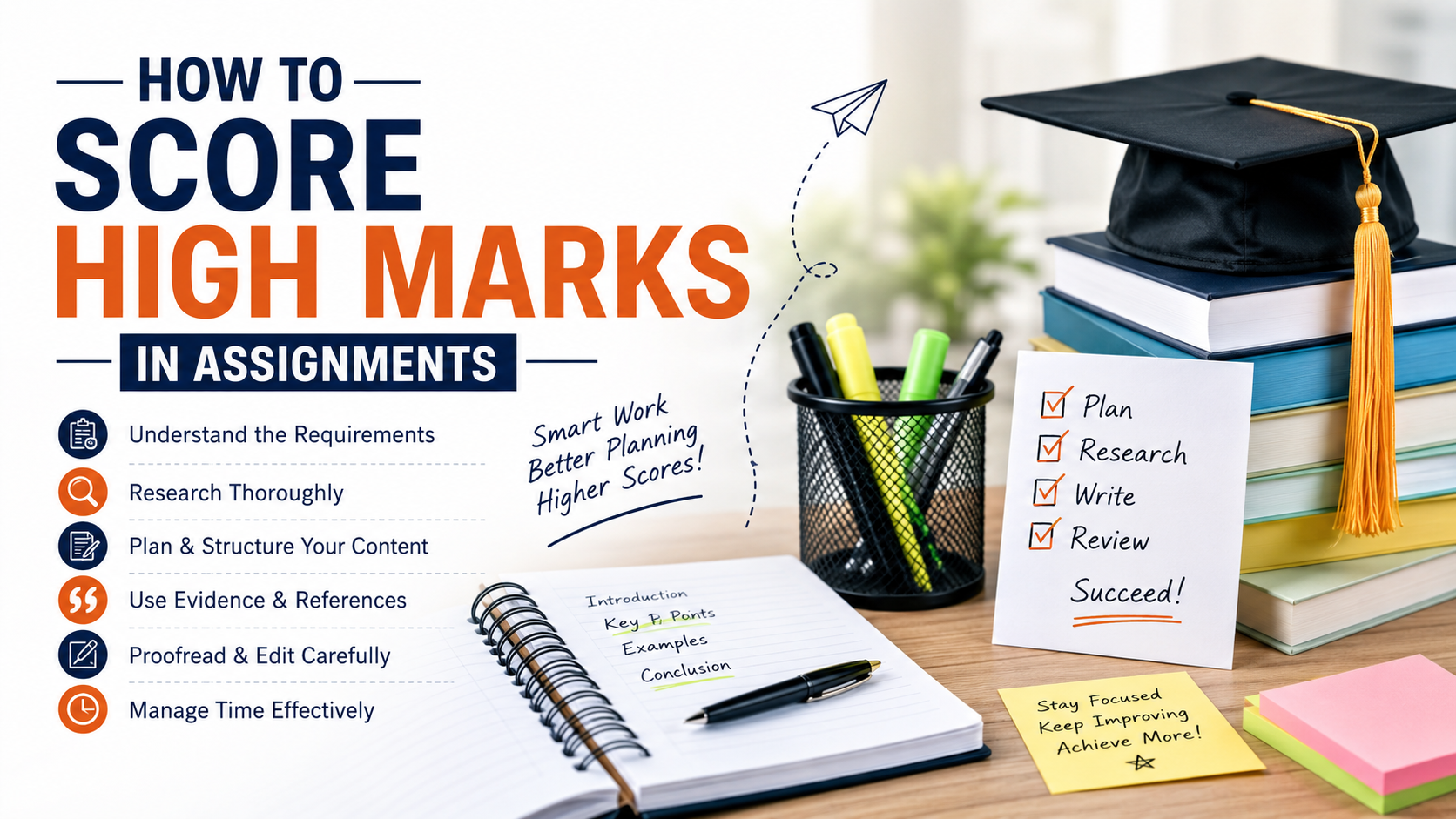
The answer lies in following a structured approach. From understanding the assignment brief to presenting well-researched arguments and proofreading your work, every step contributes to your final grade.
In this guide, we'll share practical and proven strategies to help you consistently score higher marks in your assignments.
Why Assignments Matter
Assignments allow instructors to evaluate your understanding of a subject beyond classroom exams. They assess your ability to:
Conduct independent research
Think critically
Present logical arguments
Apply theoretical knowledge
Communicate effectively in academic writing
A well-written assignment not only improves your grades but also prepares you for future academic and professional success.
10 Proven Tips to Score High Marks in Assignments
1. Understand the Assignment Requirements
Before you begin writing, carefully read the assignment instructions.
Pay attention to:
Word count
Submission deadline
Referencing style
Assessment criteria
Required format
Learning objectives
Understanding these requirements prevents unnecessary mistakes that can cost valuable marks.
2. Start Your Assignment Early
One of the biggest mistakes students make is leaving assignments until the last minute.
Starting early gives you enough time to:
Conduct thorough research
Organize ideas
Write multiple drafts
Edit carefully
Proofread before submission
Proper time management significantly improves the quality of your work.
3. Conduct Quality Research
High-scoring assignments are built on credible research.
Use reliable sources such as:
Academic journals
University textbooks
Government publications
Research papers
Industry reports
Avoid relying solely on blogs or unverified websites.
4. Create a Clear Structure
A well-organized assignment is easier to read and demonstrates professionalism.
Your assignment should generally include:
Introduction
Introduce the topic
State the purpose
Present your thesis
Main Body
Discuss key arguments
Support each point with evidence
Include examples and citations
Conclusion
Summarize findings
Reinforce your main argument
Avoid introducing new information
5. Answer the Question Directly
Many students lose marks because they include unnecessary information.
Instead:
Stay focused on the topic.
Answer every part of the question.
Support your arguments with evidence.
Avoid going off-topic.
Always keep referring back to the assignment question while writing.
6. Use Academic Language
Academic writing should be:
Formal
Clear
Objective
Precise
Avoid:
Slang
Informal expressions
Personal opinions without evidence
Repetitive wording
Strong vocabulary and professional tone improve readability.
7. Reference Correctly
Incorrect referencing can lead to lost marks and plagiarism concerns.
Common referencing styles include:
APA
Harvard
MLA
Chicago
IEEE
Ensure every source you use is properly cited both in-text and in the reference list.
8. Proofread Carefully
Even excellent content can lose marks because of grammar or formatting mistakes.
Before submitting:
Check grammar
Correct spelling errors
Improve sentence flow
Verify citations
Remove repetition
Check formatting
Reading your assignment aloud often helps identify awkward sentences.
9. Follow Formatting Guidelines
Presentation matters.
Ensure your assignment includes:
Proper headings
Consistent font
Appropriate spacing
Page numbers (if required)
Correct margins
Well-formatted references
A professional appearance creates a positive first impression.
10. Seek Feedback
Don't hesitate to ask:
Professors
Tutors
Classmates
Academic support services
Constructive feedback helps identify weaknesses before final submission.
Common Mistakes That Reduce Assignment Marks
Avoid these common errors:
Starting too late
Poor research
Weak thesis statement
Lack of evidence
Grammar mistakes
Plagiarism
Incorrect referencing
Ignoring assignment instructions
Poor paragraph structure
No proofreading
Identifying these mistakes early can significantly improve your grades.
Quick Checklist Before Submission
Use this checklist before submitting your assignment:
✅ Followed all assignment instructions
✅ Answered the question completely
✅ Used credible academic sources
✅ Included accurate references
✅ Checked grammar and spelling
✅ Maintained logical structure
✅ Stayed within the word limit
✅ Proofread carefully
Can Professional Assignment Help Improve Your Grades?
Sometimes students face multiple deadlines, difficult topics, or personal commitments that make completing assignments challenging.
Professional assignment guidance can help by:
Explaining complex concepts
Improving assignment structure
Ensuring proper referencing
Providing plagiarism-free academic support
Offering expert feedback
When used ethically as a learning resource, assignment help services can enhance your understanding and improve academic performance.
Final Thoughts
Scoring high marks in assignments isn't about luck—it's about following the right process. By understanding the assignment requirements, conducting quality research, organizing your ideas effectively, using credible references, and proofreading carefully, you can consistently improve your academic performance.
Remember, every assignment is an opportunity to develop valuable research, analytical, and communication skills that will benefit you throughout your education and future career. With preparation, discipline, and attention to detail, achieving top grades becomes much more attainable.
Frequently Asked Questions
Everything you need to know about our services


