Assignment Strategies for Mature Students (2026 Complete Guide)
Introduction
Returning to education as a mature student is both exciting and challenging. Whether you are pursuing a university degree after years in the workforce, changing careers, upgrading your qualifications, or fulfilling a lifelong ambition, studying later in life requires determination, effective planning, and confidence.
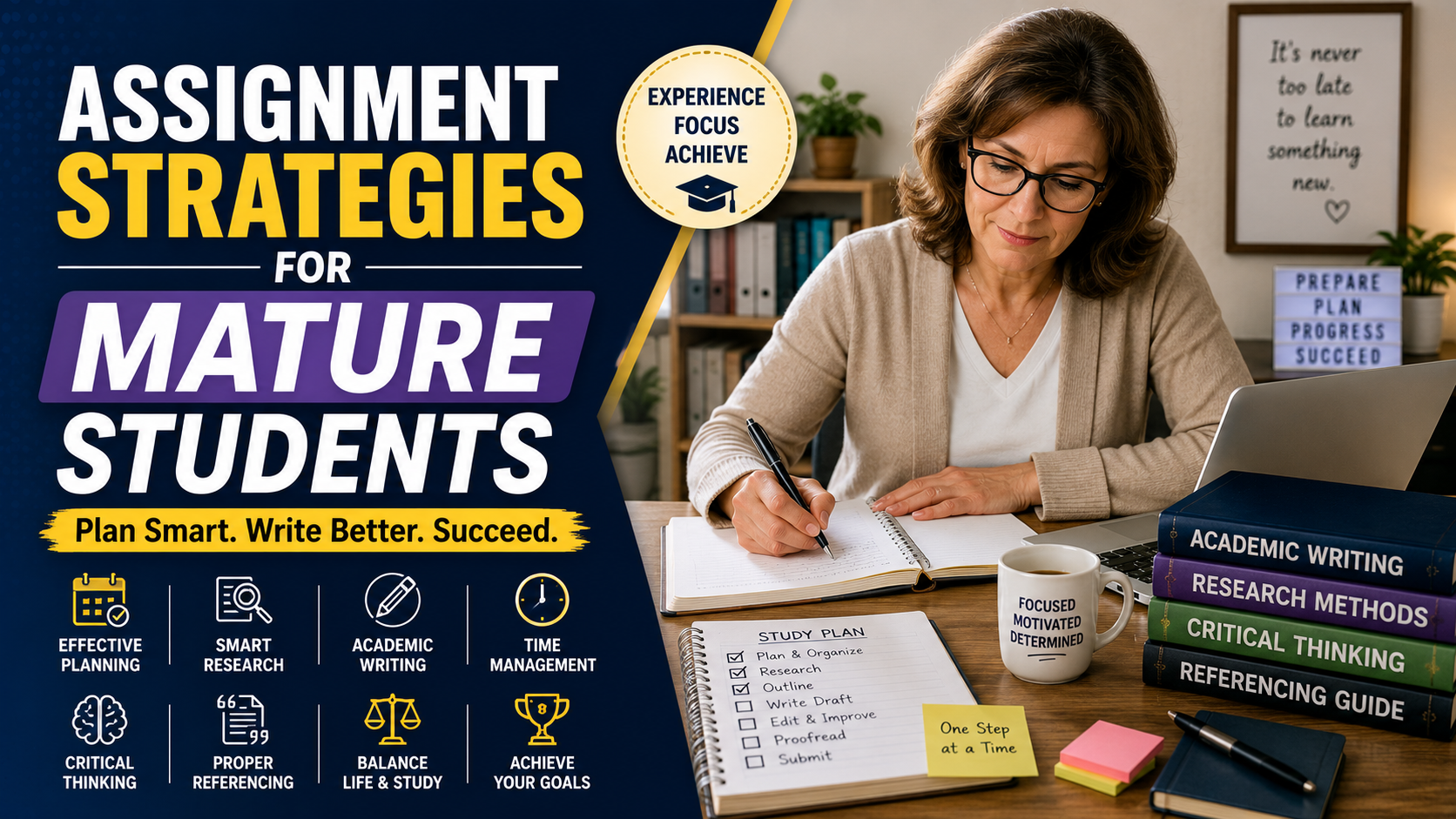
Unlike traditional students, mature learners often balance university with full-time employment, family responsibilities, financial commitments, and personal obligations. These additional responsibilities can make assignment writing feel overwhelming, especially if it has been several years since you last studied.
Fortunately, mature students bring valuable strengths to higher education, including professional experience, practical problem-solving skills, discipline, and motivation. With the right assignment strategies, these strengths can become significant academic advantages.
This guide shares practical techniques to help mature students plan assignments, improve academic writing, manage time effectively, and achieve success throughout their university journey.
Who Is Considered a Mature Student?
Although definitions vary between universities, mature students are generally learners who begin higher education later than the traditional university age.
Many mature students:
Return after several years away from education.
Study while working full-time.
Balance parenting and family commitments.
Change careers.
Complete postgraduate qualifications.
Study through distance learning or part-time programmes.
Each journey is unique, but many challenges are shared.
Understand the Assignment Brief
Before starting any assignment, carefully read the assessment instructions.
Pay close attention to:
Assignment question
Learning outcomes
Marking criteria
Word count
Referencing style
Submission deadline
Highlight directive words such as:
Analyse
Evaluate
Compare
Critically discuss
Reflect
Assess
Understanding exactly what is required prevents unnecessary rewriting later.
Plan Assignments Early
One of the most effective strategies for mature students is early planning.
Instead of waiting until the deadline approaches:
Week 1
Read the assignment brief.
Begin preliminary research.
Week 2
Organise academic sources.
Prepare an outline.
Week 3
Write the first draft.
Week 4
Edit, proofread, and reference.
Breaking assignments into stages reduces pressure and improves quality.
Create a Realistic Study Schedule
Many mature students balance:
Employment
Family
Childcare
Household responsibilities
Community commitments
Rather than creating unrealistic timetables, build a flexible weekly schedule that fits your lifestyle.
Consistency matters more than studying for long hours.
Use Professional Experience Wisely
One advantage mature students possess is practical experience.
Where appropriate, connect academic theories with professional or personal experiences while following university guidance.
Real-world examples often strengthen critical analysis and reflective writing.
Develop Strong Research Skills
High-quality assignments rely on credible academic evidence.
Use:
Peer-reviewed journal articles
Academic books
University library databases
Government reports
Professional organisations
Avoid relying solely on general websites or unverified online sources.
Focus on Critical Thinking
University assignments require more than describing information.
Ask questions such as:
Why is this theory important?
What evidence supports it?
Are there alternative viewpoints?
What are its strengths and limitations?
How does current research compare?
Critical analysis demonstrates deeper academic understanding.
Create Assignment Outlines
Before writing, organise your ideas.
Typical assignment structure:
Introduction
Introduce the topic and explain the purpose.
Main Body
Present evidence, compare viewpoints, analyse research, and answer the assignment question.
Conclusion
Summarise key findings without introducing new arguments.
References
Include every cited source using the required referencing style.
Planning before writing saves time later.
Improve Academic Writing
Academic writing should be:
Clear
Formal
Logical
Evidence-based
Objective
Avoid conversational language or unsupported opinions.
Each paragraph should present one main idea supported by credible evidence.
Learn Referencing Early
Incorrect referencing is one of the easiest ways to lose marks.
Become familiar with the referencing style required by your university, such as:
APA
Harvard
MLA
Chicago
OSCOLA
Reference sources consistently throughout every assignment.
Balance Study with Family Responsibilities
Family responsibilities often require flexibility.
Helpful strategies include:
Studying early in the morning.
Using children's school hours.
Planning study sessions with family support.
Communicating assignment deadlines to family members.
Involving your support network reduces unnecessary stress.
Study in Small Sessions
Long study sessions are not always realistic.
Instead:
Read one article.
Write one section.
Review one lecture.
Edit one paragraph.
Small achievements accumulate into significant progress over time.
Stay Organised
Organise study materials carefully.
Create folders for:
Lecture notes
Assignment drafts
Research articles
References
Feedback
Completed assessments
Organisation reduces wasted time searching for documents.
Build Confidence
Many mature students worry they have "forgotten how to study."
Remember:
Academic skills improve through practice.
Every assignment develops:
Writing
Research
Critical thinking
Confidence
Progress matters more than perfection.
Seek University Support
Universities provide extensive support services.
These often include:
Academic writing centres
Study skills workshops
Librarians
Learning advisers
Tutors
Student wellbeing services
Using available support demonstrates effective learning—not weakness.
Common Assignment Mistakes
Avoid these frequent mistakes:
Starting too late.
Ignoring marking criteria.
Weak research.
Poor referencing.
Descriptive writing.
Lack of proofreading.
Poor time management.
Recognising these problems early improves grades significantly.
Weekly Study Example
Day | Activity |
|---|---|
Monday | Read journal articles |
Tuesday | Research assignment |
Wednesday | Write draft |
Thursday | Continue writing |
Friday | Edit assignment |
Saturday | Referencing and proofreading |
Sunday | Prepare next week's study plan |
Adapt this schedule according to work and family commitments.
Assignment Checklist
Before submitting, confirm that you have:
✓ Answered the assignment question
✓ Followed the marking criteria
✓ Used credible academic sources
✓ Demonstrated critical analysis
✓ Referenced correctly
✓ Checked grammar and spelling
✓ Stayed within the word count
✓ Proofread carefully
Final Thoughts
Returning to university as a mature student requires commitment, resilience, and effective organisation, but it also offers tremendous opportunities for personal and professional growth. Your professional experience, life skills, and motivation provide a strong foundation for academic success. By planning assignments early, using credible research, developing critical thinking skills, and maintaining a realistic study routine, you can confidently overcome the challenges of balancing education with other responsibilities.
Remember that every assignment strengthens your academic abilities and brings you closer to achieving your educational and career goals. Progress may sometimes feel slow, but consistent effort and smart planning will help you succeed throughout your university journey.
Frequently Asked Questions
Everything you need to know about our services
Related Posts

How to Study While Working Full-Time (2026 Complete Guide)

Assignment Tips for Healthcare Professionals Studying While Working (2026 Guide)
