Assignment Planning for Distance Learning Students (2026 Complete Guide)
Introduction
Distance learning has transformed higher education, making it possible for students to earn degrees and professional qualifications from anywhere in the world. Whether you're studying online while working full-time, managing family responsibilities, or pursuing education from another country, flexibility is one of the biggest advantages of distance learning. However, this flexibility also comes with greater responsibility.
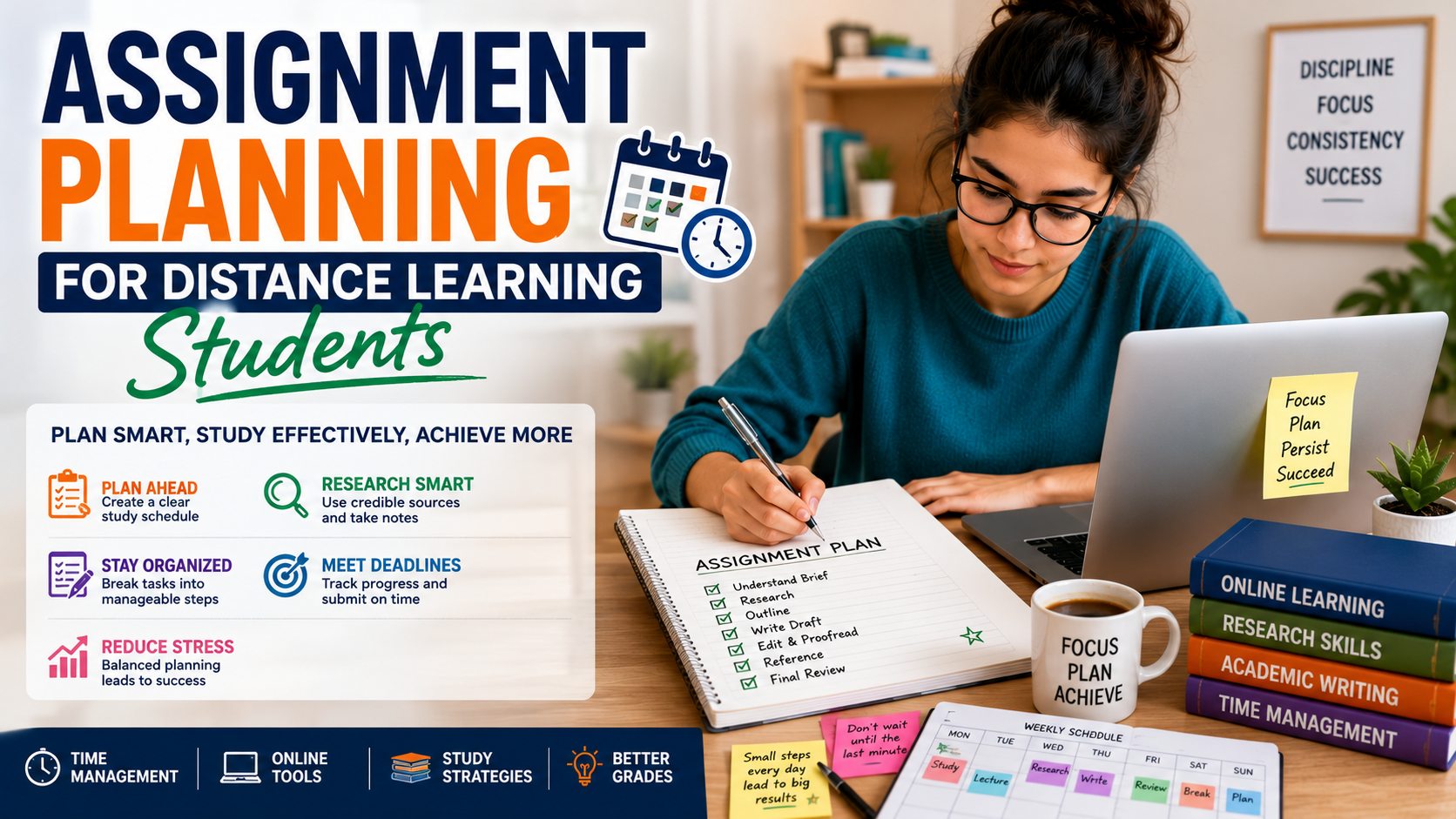
Unlike traditional classroom learning, distance education requires students to manage their own schedules, stay motivated, and complete assignments independently. Without a structured approach, it is easy to fall behind on coursework, miss deadlines, or feel overwhelmed by multiple assignments.
The good news is that effective assignment planning can help you stay organised, reduce stress, and consistently produce high-quality academic work. This guide explains how distance learning students can plan assignments efficiently, manage their workload, and improve academic performance.
Why Assignment Planning Is Important
Assignment planning is more than simply writing a to-do list. It is the process of organising your time, resources, and study activities before you begin writing.
Good planning helps you:
Meet assignment deadlines.
Produce higher-quality work.
Reduce last-minute stress.
Improve research efficiency.
Balance study with work and family responsibilities.
Stay motivated throughout the semester.
Students who plan their assignments are often able to spend more time analysing information instead of rushing to finish before submission.
Understand the Assignment Brief
The first step in planning any assignment is understanding exactly what your lecturer expects.
Carefully read the assignment instructions and identify:
The topic.
Word count.
Submission deadline.
Learning outcomes.
Assessment criteria.
Referencing style.
Required structure.
Highlight important keywords such as analyse, evaluate, compare, discuss, justify, or critically assess. These command words indicate the level of analysis expected in your assignment.
If any instructions are unclear, ask your lecturer or tutor before beginning your research.
Create a Realistic Assignment Timeline
One of the biggest mistakes distance learners make is waiting until the deadline is close before starting.
Instead, divide the assignment into smaller stages.
A simple timeline might look like this:
Week | Task |
|---|---|
Week 1 | Read assignment brief and begin research |
Week 2 | Gather academic sources and create an outline |
Week 3 | Write the first draft |
Week 4 | Edit, proofread, and submit |
Breaking the assignment into smaller milestones makes the workload more manageable.
Schedule Dedicated Study Time
Distance learning provides flexibility, but that flexibility can quickly disappear without a routine.
Choose regular study hours that fit your lifestyle.
For example:
Early mornings before work.
Lunch breaks.
Evenings after dinner.
Weekend study sessions.
Treat these study periods like important appointments that should not be skipped.
Consistency is more effective than studying for long hours only occasionally.
Set SMART Study Goals
Rather than setting vague goals like:
"Work on assignment."
Create specific goals such as:
Read three journal articles today.
Finish the introduction.
Complete the literature review outline.
Edit 1,000 words before Friday.
Specific goals help measure progress and maintain motivation.
Gather Credible Academic Sources Early
Research often takes longer than students expect.
Begin searching for sources as soon as the assignment is released.
Prioritise:
Peer-reviewed journal articles.
Academic books.
Government publications.
Professional organisations.
Industry reports.
University library resources.
Avoid relying only on blogs or general websites unless your lecturer specifically allows them.
Keeping organised research notes will save time later when writing references.
Create an Assignment Outline
Never begin writing without a clear structure.
An outline helps organise your ideas before drafting.
A typical university assignment may include:
Introduction
Background information
Main discussion
Critical analysis
Recommendations (if required)
Conclusion
References
Knowing what each section will cover reduces writer's block and improves logical flow.
Break Large Tasks into Smaller Steps
Large assignments can seem overwhelming.
Instead of focusing on writing an entire report, complete one small task at a time.
For example:
Read the assignment brief.
Search for journal articles.
Write headings.
Complete one section.
Add references.
Proofread.
Small achievements build confidence and reduce procrastination.
Organise Your Study Materials
Keep all assignment resources in one place.
This may include:
Lecture slides.
Reading notes.
Journal articles.
Assessment rubric.
Assignment instructions.
Reference list.
Draft versions.
A well-organised workspace saves valuable time when deadlines approach.
Use Technology to Stay Organised
Digital tools can simplify assignment planning.
Useful tools include:
Calendar apps.
Task management software.
Cloud storage.
Note-taking applications.
Citation managers.
Focus timers.
Choose tools that match your study style rather than using too many different platforms.
Avoid Procrastination
Procrastination is one of the biggest challenges in distance learning because there is often less external accountability.
To overcome procrastination:
Start assignments early.
Set personal deadlines before the official deadline.
Study in short, focused sessions.
Remove distractions.
Reward yourself after completing important tasks.
Progress made consistently is more effective than last-minute effort.
Balance Study with Personal Responsibilities
Many distance learning students also manage employment, childcare, or family responsibilities.
Create a schedule that includes:
Work commitments.
Study sessions.
Family time.
Exercise.
Sleep.
Relaxation.
Maintaining balance helps prevent burnout and supports long-term academic success.
Review Your Progress Regularly
At the end of each week, ask yourself:
Have I completed this week's study goals?
What tasks remain unfinished?
Are any deadlines approaching?
Do I need to adjust my study schedule?
Regular reviews help keep your assignment plan realistic and achievable.
Common Assignment Planning Mistakes
Avoid these common mistakes:
Starting assignments too late.
Ignoring the assessment criteria.
Conducting insufficient research.
Writing without an outline.
Leaving proofreading until submission day.
Forgetting to back up files.
Underestimating the time needed for referencing.
Learning from these mistakes improves future assignments.
Tips for Staying Motivated
Distance learning requires self-discipline.
Stay motivated by:
Remembering your long-term career goals.
Celebrating small achievements.
Tracking completed tasks.
Joining online study groups.
Creating a comfortable study environment.
Maintaining a consistent routine.
Small, consistent progress leads to significant results over time.
Sample Weekly Assignment Plan
Day | Study Activity |
|---|---|
Monday | Read assignment instructions and plan tasks |
Tuesday | Research journal articles |
Wednesday | Create assignment outline |
Thursday | Write first draft |
Friday | Continue writing and add references |
Saturday | Edit and proofread |
Sunday | Final review and prepare for submission |
Adjust this schedule according to your work, family, and personal commitments.
Final Thoughts
Successful distance learning is built on effective planning rather than last-minute effort. By understanding assignment requirements, creating a structured study schedule, researching early, and breaking coursework into manageable stages, you can reduce stress while producing higher-quality assignments.
Remember that consistency matters more than perfection. Even small daily study sessions can lead to significant academic progress over time. With careful planning, strong organisational skills, and a commitment to continuous improvement, distance learning students can confidently balance their studies with work, family, and other responsibilities while achieving their educational goals.
Frequently Asked Questions
Everything you need to know about our services
Related Posts

Balancing Work and University Assignments (2026 Guide for Busy Students)

Time Management for Part-Time Students (2026 Guide to Balance Work, Study & Life)
