Time Management for Part-Time Students (2026 Guide to Balance Work, Study & Life)
Introduction
Studying part-time offers flexibility, allowing students to continue working, caring for family, or managing other responsibilities while earning a qualification. However, balancing university deadlines with work schedules and personal commitments can quickly become overwhelming without effective time management.
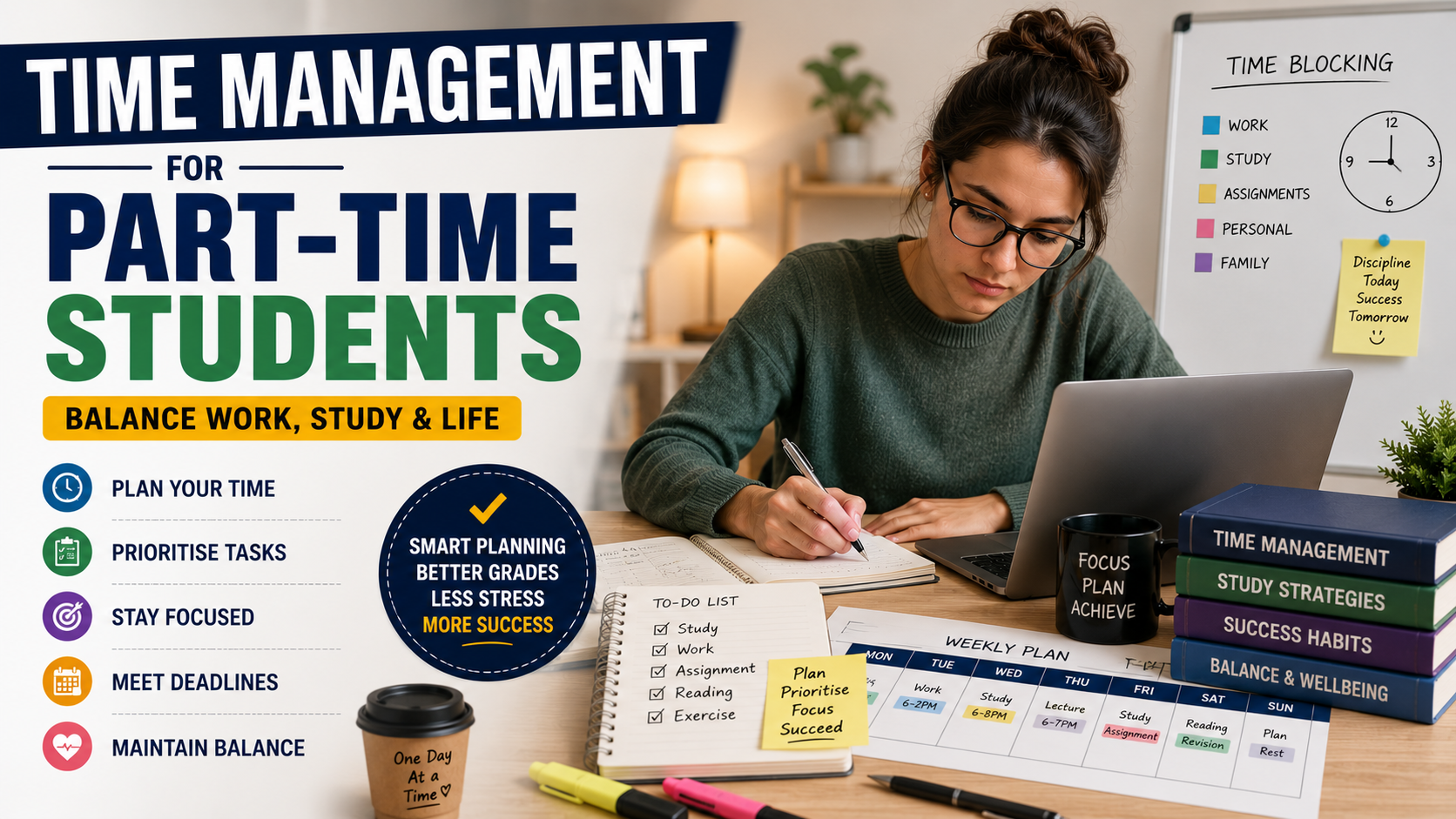
Unlike full-time students, part-time learners often have fewer hours available for studying. Every study session needs to be purposeful, organised, and productive. Developing strong time management skills not only improves academic performance but also reduces stress and helps maintain a healthy work–study–life balance.
This guide explains practical time management strategies for part-time students, common mistakes to avoid, and proven techniques to stay organised throughout your course.
Why Time Management Matters for Part-Time Students
Part-time students often juggle multiple responsibilities simultaneously.
These may include:
Full-time or part-time employment
Family commitments
Household responsibilities
Personal wellbeing
University lectures
Assignment deadlines
Exam preparation
Without a clear plan, important tasks can easily be overlooked, resulting in missed deadlines and unnecessary stress.
Good time management allows you to:
Complete assignments on time.
Reduce last-minute pressure.
Improve academic performance.
Maintain better work–life balance.
Increase productivity.
Protect your physical and mental wellbeing.
Set Clear Academic Goals
Start each semester by identifying your objectives.
Examples include:
Achieve a target grade.
Submit every assignment before the deadline.
Improve academic writing.
Develop stronger research skills.
Build confidence in presentations.
Breaking long-term goals into smaller weekly objectives makes them easier to achieve.
Create a Weekly Study Schedule
One of the most effective strategies is creating a realistic timetable.
Include:
Working hours
Lectures and tutorials
Independent study
Assignment writing
Reading time
Revision sessions
Exercise
Family commitments
Rest
Treat study sessions like professional appointments that should not be cancelled unnecessarily.
Prioritise Important Tasks
Not every task has the same level of urgency.
Use a priority system such as:
High Priority
Assignment deadlines
Exams
Group projects
Medium Priority
Weekly reading
Research
Revision
Low Priority
Organising notes
Optional reading
Administrative tasks
Completing high-impact work first helps prevent last-minute stress.
Study in Short, Focused Sessions
Many part-time students cannot dedicate several uninterrupted hours to studying.
Instead, aim for focused sessions of 30–60 minutes.
Benefits include:
Better concentration
Reduced mental fatigue
Improved information retention
Easier scheduling around work commitments
Even one productive hour each day can produce significant long-term results.
Break Large Assignments into Smaller Tasks
Large assignments often feel intimidating.
Instead of thinking:
"Write a 3,000-word report."
Break it into manageable stages:
Read the assignment brief.
Conduct research.
Create an outline.
Write the introduction.
Complete one section at a time.
Add references.
Edit and proofread.
Small achievements build momentum and reduce procrastination.
Use Digital Planning Tools
Technology can help organise your workload.
Useful tools include:
Digital calendars
Task management apps
Reminder applications
Cloud storage
Note-taking software
Reference managers
Choose a system that fits your routine and use it consistently.
Avoid Multitasking
Many students believe multitasking improves productivity.
Research generally shows the opposite.
Instead:
Finish one task.
Take a short break.
Begin the next task.
Single-tasking often leads to better concentration and fewer mistakes.
Learn to Say No
Part-time students frequently overcommit.
If your schedule is already full, consider postponing non-essential activities during busy assessment periods.
Protecting study time is essential for long-term success.
Prepare for Deadlines Early
Avoid starting assignments only a few days before submission.
Instead:
Begin research as soon as the assignment is released.
Write gradually.
Edit several days before submission.
Early preparation allows time to improve your work and address unexpected challenges.
Create a Dedicated Study Space
A consistent study environment improves focus.
Choose a quiet area with:
Good lighting
Comfortable seating
Reliable internet
Minimal distractions
Necessary books and equipment
A dedicated workspace signals your brain that it is time to concentrate.
Protect Your Wellbeing
Academic success depends on physical and mental health.
Remember to:
Get enough sleep.
Stay physically active.
Eat balanced meals.
Take regular breaks.
Spend time with family and friends.
Burnout reduces productivity far more than taking short breaks.
Review Your Progress Weekly
At the end of each week, ask yourself:
What did I complete?
What remains unfinished?
Which deadlines are approaching?
What should I prioritise next week?
Regular reviews help keep your study plan realistic and adaptable.
Common Time Management Mistakes
Avoid these common errors:
Leaving assignments until the last minute.
Underestimating research time.
Ignoring the assessment brief.
Studying without a schedule.
Spending too much time on low-priority tasks.
Forgetting to schedule breaks.
Trying to complete multiple assignments simultaneously.
Recognising these habits early can significantly improve your productivity.
Sample Weekly Study Plan
Day | Study Focus |
|---|---|
Monday | Review lecture notes and plan the week |
Tuesday | Read journal articles and textbooks |
Wednesday | Work on assignment research |
Thursday | Write assignment sections |
Friday | Complete referencing and editing |
Saturday | Revision and practice questions |
Sunday | Review progress and prepare for the next week |
Adjust this timetable according to your employment schedule and family responsibilities.
Practical Tips for Staying Productive
Set realistic daily goals.
Turn off unnecessary notifications while studying.
Use a timer to maintain focus.
Reward yourself after completing important tasks.
Keep assignment deadlines visible.
Review feedback from previous assignments to improve future work.
Consistency is more valuable than occasional bursts of intense study.
Final Thoughts
Time management is one of the most valuable skills a part-time student can develop. Balancing employment, family responsibilities, and university coursework is demanding, but a realistic study schedule, clear priorities, and consistent daily habits can make the workload far more manageable.
Rather than relying on last-minute study sessions, focus on steady progress throughout the semester. By planning ahead, breaking assignments into manageable stages, and protecting your wellbeing, you can successfully achieve your academic goals while maintaining your professional and personal commitments.
Frequently Asked Questions
Everything you need to know about our services


