Nursing Assignment Help for SIT Students
Introduction
Nursing assignments require much more than simply describing a patient's condition. Students need to demonstrate clinical reasoning, evidence-based practice, professional communication, research skills, and an understanding of nursing principles.
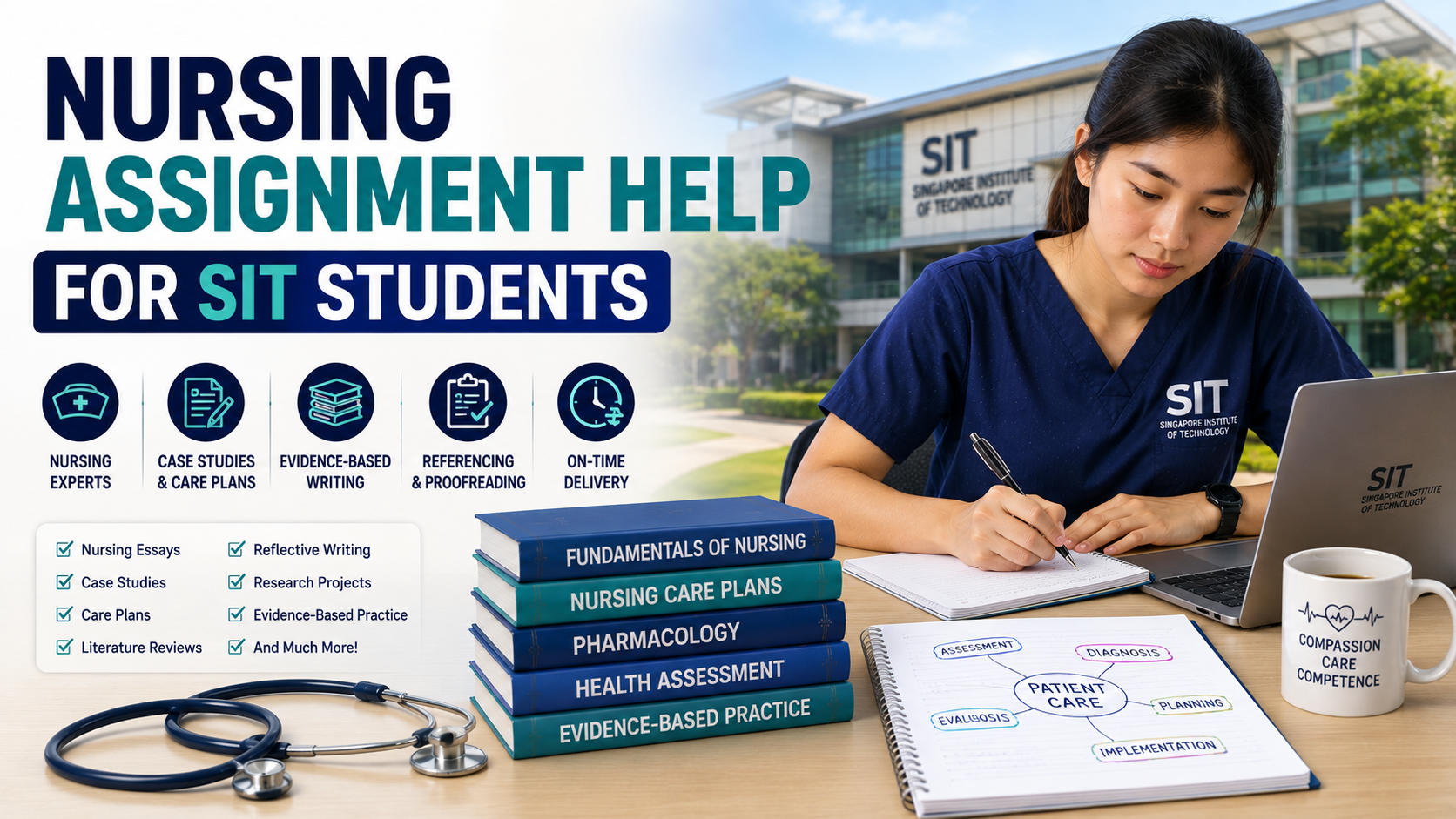
For students at the Singapore Institute of Technology (SIT), nursing coursework can involve case studies, reflective writing, literature reviews, care planning, clinical reasoning, evidence-based practice, research projects, and other academically demanding tasks.
Balancing academic assignments with clinical learning, placements, assessments, and personal responsibilities can make deadlines particularly challenging.
This guide explains the common types of nursing assignments SIT students may encounter, how to approach them effectively, and how AssignmentCart provides ethical academic support to improve the clarity, structure, referencing, and presentation of students' own work.
What Makes Nursing Assignments Challenging?
Nursing assignments often require students to connect theory with practical healthcare situations.
Depending on the assignment, you may need to:
Analyse a patient scenario
Apply nursing theories
Evaluate clinical evidence
Discuss appropriate interventions
Demonstrate clinical reasoning
Review academic literature
Develop a care plan
Discuss ethical considerations
Evaluate nursing practice
Use evidence to support recommendations
This combination of clinical knowledge and academic writing can make nursing coursework demanding.
Common Nursing Assignments for SIT Students
Different nursing modules may require different forms of academic work.
Common assignments include:
Nursing essays
Patient case studies
Clinical case analyses
Nursing care plans
Literature reviews
Evidence-based practice assignments
Reflective essays
Research proposals
Healthcare reports
Group projects
Presentation materials
Dissertation or research projects
Understanding the assessment criteria before beginning is essential.
Nursing Case Study Help
Case studies require students to analyse a healthcare situation and apply relevant nursing knowledge.
A strong case study should normally establish:
Patient Context
Explain the relevant patient background and clinical situation without including unnecessary information.
Assessment
Identify relevant clinical findings and explain their significance.
Nursing Problems
Discuss the key nursing concerns supported by appropriate evidence.
Interventions
Explain appropriate nursing interventions and justify them using reliable academic sources.
Evaluation
Discuss how the effectiveness of interventions could be evaluated.
The analysis should remain focused on the assignment question rather than simply describing the patient's condition.
Nursing Care Plan Assignments
Care plans require structured clinical reasoning.
Depending on the assignment requirements, students may need to address:
Assessment findings
Nursing problems or diagnoses
Goals
Expected outcomes
Nursing interventions
Rationale
Evaluation
Each intervention should have a clear rationale supported by appropriate evidence where required.
A well-presented care plan should demonstrate logical connections between the patient's needs, proposed interventions, and expected outcomes.
Evidence-Based Nursing Assignments
Evidence-based practice is an important component of modern nursing education.
Students may need to evaluate evidence from:
Peer-reviewed journal articles
Systematic reviews
Clinical guidelines
Government healthcare resources
Professional organisations
Research studies
Avoid relying heavily on unverified websites or sources without academic credibility.
Your evidence should directly support the claims you make.
Literature Review Help for Nursing Students
A nursing literature review should do more than summarise individual articles.
A strong literature review should:
Identify relevant research
Compare different findings
Evaluate research quality
Identify areas of agreement
Identify conflicting evidence
Highlight research gaps
Connect findings to the research question
For example, instead of discussing ten studies separately, organise the literature around meaningful themes or debates.
Nursing Reflective Writing
Reflective assignments require a different writing approach from traditional academic essays.
Students may be asked to reflect on:
Clinical experiences
Communication
Teamwork
Patient interactions
Professional development
Ethical situations
Clinical decision-making
A strong reflection should demonstrate what was learned and how that learning could influence future professional practice.
Simply describing what happened is generally not enough.
Referencing in Nursing Assignments
Nursing assignments require accurate academic referencing.
Depending on your module or programme requirements, you may need to use a specific referencing style.
Common styles in healthcare and nursing education include:
APA
Harvard
Vancouver
Other institution-specific styles
Always follow the official requirements provided for your assignment.
Common referencing mistakes include:
Missing citations
Incorrect author information
Inconsistent formatting
Missing publication details
Incorrect URLs or DOI information
References that do not appear in the text
How to Structure a Nursing Essay
A typical nursing essay may include:
Introduction
Introduce the topic and explain the focus of the assignment.
Main Discussion
Develop your arguments using relevant nursing evidence and academic literature.
Critical Analysis
Compare evidence, evaluate different perspectives, and explain the implications for nursing practice.
Conclusion
Summarise the key arguments and directly answer the assignment question.
References
Provide all sources according to the required referencing style.
Always adapt the structure to the specific assessment instructions.
Common Nursing Assignment Mistakes
Students often lose marks because they:
Describe rather than analyse
Make unsupported clinical claims
Use outdated sources
Rely on unreliable websites
Ignore the assignment question
Fail to connect evidence with arguments
Use weak paragraph structure
Provide insufficient critical discussion
Reference inconsistently
Submit without proofreading
Addressing these issues before submission can significantly improve academic presentation.
How to Improve Critical Analysis
Critical analysis is particularly important in nursing assignments.
Instead of writing:
Research shows that communication is important in nursing.
Develop the argument further by considering:
What does the research actually demonstrate?
How strong is the evidence?
Are there conflicting findings?
What are the limitations?
How does the evidence apply to nursing practice?
What are the implications for patients?
Critical writing demonstrates that you understand and can evaluate the evidence rather than simply repeat it.
Nursing Assignment Proofreading Checklist
Before submitting your SIT nursing assignment, check:
✔ Have you answered the exact assignment question?
✔ Is your argument clear?
✔ Have you used credible academic sources?
✔ Are claims supported by evidence?
✔ Have you demonstrated critical analysis?
✔ Are clinical terms used accurately?
✔ Is your assignment logically structured?
✔ Are citations formatted correctly?
✔ Does the reference list match the citations?
✔ Have you followed the required word count?
✔ Have you checked grammar and spelling?
✔ Have you proofread the final document?
How AssignmentCart Can Help SIT Nursing Students
AssignmentCart provides ethical academic support for nursing students in Singapore.
Support can include:
Nursing assignment proofreading
Academic editing
Case study editing
Literature review guidance
Reflective writing feedback
Referencing checks
Formatting reviews
Research proposal editing
Dissertation proofreading
Academic writing improvement
The focus is on helping students improve the presentation, clarity, organisation, and academic quality of their own work.
Why Students Choose AssignmentCart
Students seeking academic support can benefit from:
Subject-focused academic specialists
Experienced academic editors
Confidential document handling
Flexible turnaround options
Detailed proofreading
Referencing reviews
Formatting assistance
Responsive customer support
Whether you're preparing a nursing essay, case study, literature review, reflective assignment, or research project, professional academic feedback can help identify areas that need improvement before submission.
Ethical Academic Support for Nursing Students
Nursing is a professional discipline, so academic integrity and accurate clinical information are particularly important.
Academic support should help students develop their own understanding and improve their work rather than replace their learning.
AssignmentCart can support students with:
Academic editing
Proofreading
Structure reviews
Referencing checks
Feedback on clarity
Literature organisation
Presentation improvements
Students should ensure that all submitted work complies with SIT's academic integrity policies and represents their own learning.
Final Thoughts
Nursing assignments require students to combine clinical knowledge, evidence-based reasoning, critical analysis, and professional academic writing. For SIT students balancing nursing coursework with practical and clinical learning, maintaining high academic standards can be challenging.
Whether you need help improving a nursing case study, reviewing a literature review, proofreading an essay, checking references, or strengthening the academic presentation of your own work, AssignmentCart provides ethical academic support for nursing students in Singapore.
Frequently Asked Questions
Everything you need to know about our services
Related Posts

Reflective Essay Help for Nursing Students in Ireland

Best Nursing Assignment Help for University College Cork Students
