Essay Proofreading Services: A Complete Guide for University Students
Introduction
After spending hours researching and writing an academic essay, it can be tempting to submit it immediately. However, even well-written essays often contain small mistakes such as spelling errors, punctuation issues, inconsistent formatting, or incorrect citations. These seemingly minor errors can affect readability and the overall impression of your work.
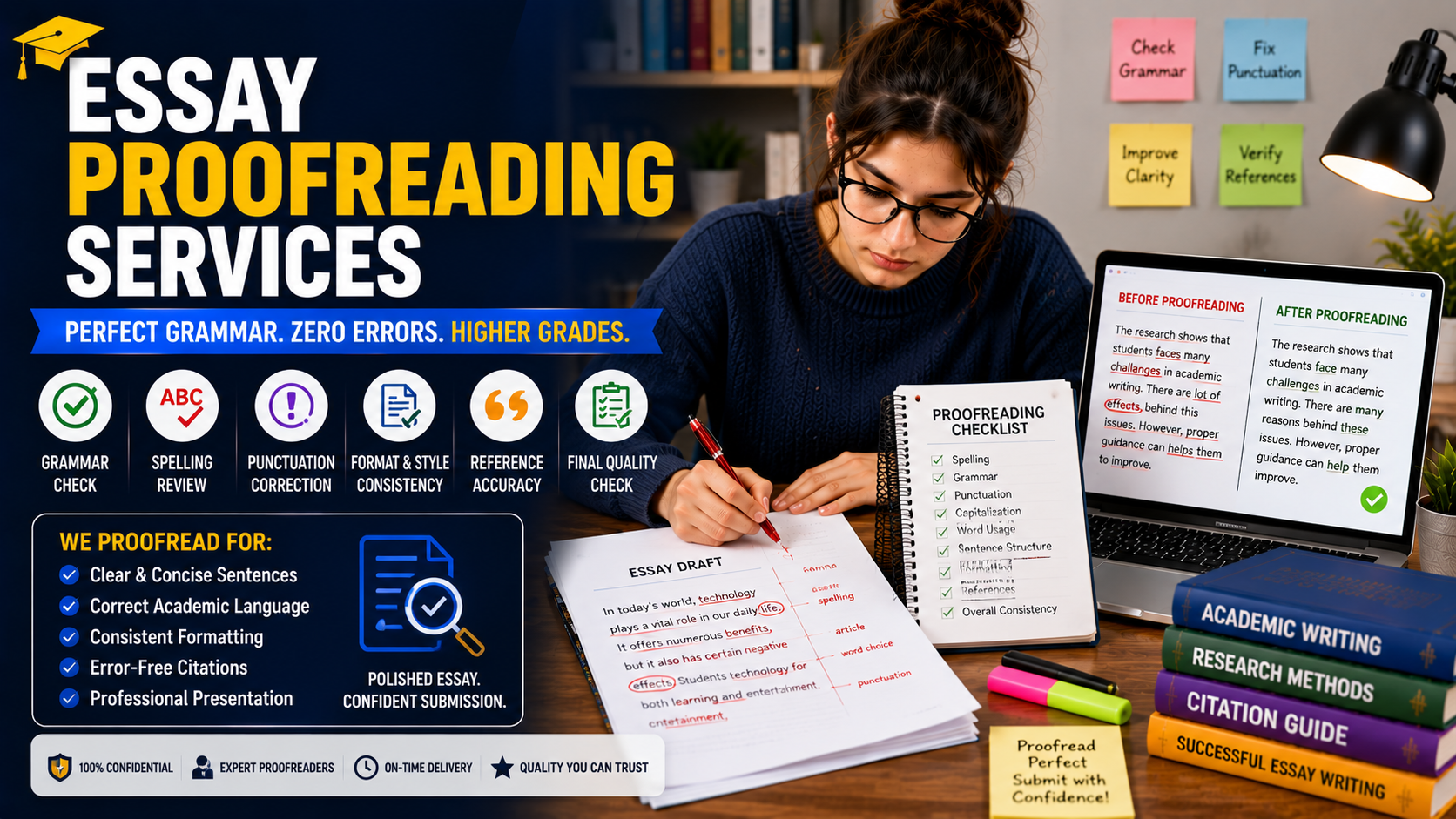
Many students use essay proofreading services to review their final draft before submission. Ethical proofreading focuses on identifying and correcting language and formatting errors while preserving the student's original ideas, arguments, and writing style.
This guide explains what proofreading involves, how it differs from editing, common mistakes proofreaders identify, and best practices for submitting a polished university essay.
What Is Essay Proofreading?
Proofreading is the final stage of the writing process.
It involves carefully reviewing a completed essay to identify and correct:
Spelling mistakes
Grammar errors
Punctuation issues
Typographical errors
Formatting inconsistencies
Citation formatting mistakes
Unlike editing, proofreading does not significantly change the content or structure of an essay.
Why Is Proofreading Important?
Proofreading helps students:
Submit polished work
Improve readability
Eliminate avoidable mistakes
Maintain professional presentation
Increase confidence before submission
Meet university formatting requirements
A carefully proofread essay demonstrates attention to detail and academic professionalism.
Proofreading vs Editing
Students often use these terms interchangeably, but they have different purposes.
Essay Editing
Editing focuses on improving:
Structure
Clarity
Logical flow
Academic tone
Argument development
Paragraph organisation
Essay Proofreading
Proofreading focuses on:
Spelling
Grammar
Punctuation
Formatting
Typographical errors
Consistency
Editing is usually completed before proofreading.
What Does a Proofreader Check?
1. Spelling
Proofreaders identify:
Misspelled words
Incorrect word forms
Common typing mistakes
Example:
Incorrect:
The resarch demonstrates...
Correct:
The research demonstrates...
2. Grammar
Grammar checks include:
Subject–verb agreement
Verb tenses
Articles
Pronouns
Sentence completeness
Correct grammar improves clarity and professionalism.
3. Punctuation
Proofreaders review:
Commas
Full stops
Apostrophes
Quotation marks
Semicolons
Colons
Correct punctuation improves readability and prevents misunderstandings.
4. Formatting
Formatting checks may include:
Font consistency
Headings
Margins
Line spacing
Page numbering
Table formatting
Figure captions
Universities often have specific formatting guidelines that students should follow.
5. Referencing
Proofreaders may check:
In-text citations
Reference list consistency
Citation formatting
Missing references
Duplicate references
Always follow your institution's required referencing style, such as Harvard, APA, MLA, OSCOLA, or IEEE.
6. Consistency
Consistency checks include:
Capitalisation
Abbreviations
Number formatting
Terminology
British or American English usage
Maintaining consistency improves the overall quality of academic writing.
Common Proofreading Mistakes Students Miss
Students frequently overlook:
Missing words
Double spaces
Incorrect punctuation
Inconsistent tense
Incorrect capitalisation
Repeated words
Formatting inconsistencies
Citation errors
Reading your own work multiple times can make these mistakes difficult to notice.
Benefits of Essay Proofreading Services
Professional proofreading can help students:
Improve presentation
Reduce language errors
Increase clarity
Meet submission requirements
Build confidence
Enhance readability
It also provides an opportunity to identify issues that may have been overlooked during writing.
Can AI Help Proofread Essays?
AI tools can assist with:
Grammar correction
Spelling suggestions
Sentence clarity
Style recommendations
Basic punctuation checks
However, students should:
Review AI suggestions carefully.
Verify citations manually.
Ensure corrections preserve their intended meaning.
Follow university AI policies.
AI can be a useful proofreading aid but should not replace careful human review.
Proofreading Checklist Before Submission
Before submitting your essay:
Check spelling and grammar.
Confirm consistent formatting.
Verify all citations and references.
Read the essay aloud.
Remove unnecessary spaces.
Review headings and page numbers.
Check the word count.
Save the correct file version.
A systematic final review can prevent avoidable errors.
How Essay Proofreading Services Can Support Students
Ethical proofreading support may include:
Grammar correction
Spelling review
Punctuation checks
Formatting review
Reference consistency checks
Typographical error correction
Constructive feedback
These services help students present polished academic work while ensuring they remain the original authors of their essays.
Why Choose AssignmentCart?
AssignmentCart provides ethical academic proofreading support through:
Essay proofreading
Grammar review
Formatting guidance
Referencing checks
Academic language support
Confidential communication
Feedback on draft essays
Our aim is to help students improve the presentation and accuracy of their own work while maintaining academic integrity.
Final Thoughts
Proofreading is the final quality check that ensures your essay is clear, accurate, and professionally presented. Correcting grammar, spelling, punctuation, formatting, and referencing errors can significantly improve readability and create a stronger impression on your examiner.
Ethical essay proofreading services—including grammar correction, formatting review, citation checks, and constructive feedback—help students submit polished essays while maintaining academic integrity and full ownership of their academic work.
Frequently Asked Questions
Everything you need to know about our services
Related Posts

Essay Writing Help for University Students: A Complete Guide

Essay Editing Services: A Complete Guide for University Students
