Essay Editing Services: A Complete Guide for University Students
Introduction
Writing an essay is only the first step in producing high-quality academic work. Even well-researched essays often contain grammar mistakes, unclear arguments, inconsistent formatting, citation errors, or structural issues that can reduce overall quality. Editing is the process of refining a draft so that it communicates ideas more clearly, logically, and professionally.
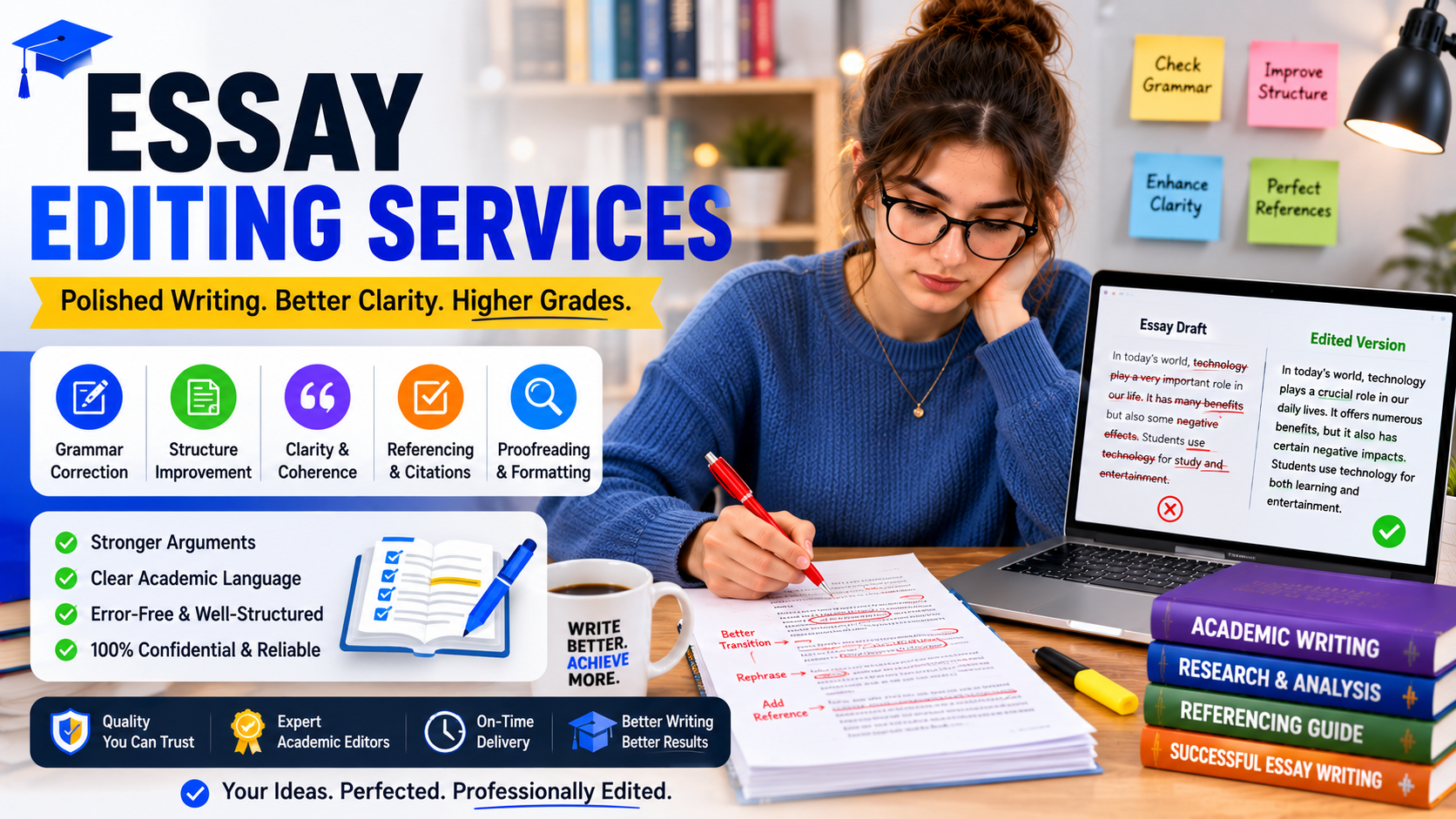
Many students seek essay editing services to improve the readability and academic standard of their work before submission. Ethical editing support—such as language improvement, structural feedback, referencing checks, formatting assistance, and proofreading—helps students strengthen their own writing while maintaining academic integrity.
This guide explains what essay editing involves, how it differs from proofreading, common editing techniques, and best practices for preparing a polished university essay.
What Are Essay Editing Services?
Essay editing services involve reviewing an existing draft and improving its quality without changing the author's original ideas or arguments.
Editing may include:
Improving sentence clarity
Correcting grammar
Refining academic language
Strengthening paragraph structure
Improving logical flow
Checking consistency
Reviewing citations
Ensuring formatting compliance
The objective is to enhance communication while preserving the student's original work.
Why Is Essay Editing Important?
Editing helps students:
Improve clarity
Strengthen arguments
Remove repetition
Correct grammar mistakes
Improve readability
Meet university formatting requirements
Present a more professional piece of academic writing
Even experienced writers benefit from reviewing and refining their drafts.
Editing vs Proofreading
Students often confuse editing with proofreading.
Essay Editing
Editing focuses on improving:
Structure
Clarity
Organisation
Academic style
Sentence flow
Word choice
Argument development
Proofreading
Proofreading is the final review before submission and focuses on:
Spelling
Grammar
Punctuation
Typographical errors
Formatting consistency
Editing generally occurs before proofreading.
What Does an Essay Editor Check?
A comprehensive editing process may include:
1. Structure
Editors review whether the essay contains:
A clear introduction
Logical body paragraphs
Effective transitions
A strong conclusion
Each section should contribute to answering the assignment question.
2. Clarity
Academic writing should be concise and easy to understand.
Editors may improve:
Long sentences
Ambiguous wording
Repetitive phrases
Unclear explanations
Clear writing improves the reader's understanding.
3. Grammar and Language
Common corrections include:
Subject–verb agreement
Verb tense consistency
Article usage
Sentence fragments
Run-on sentences
Word choice
Academic tone
These improvements enhance professionalism.
4. Paragraph Organisation
Strong paragraphs typically include:
Topic sentence
Supporting evidence
Analysis
Link to the next idea
Editors ensure paragraphs follow a logical progression.
5. Referencing
Correct referencing is essential for academic integrity.
Editors may check:
In-text citations
Reference list formatting
Citation consistency
Missing references
Always follow your university's required referencing style, such as Harvard, APA, MLA, OSCOLA, or IEEE.
6. Formatting
Formatting checks may include:
Headings
Margins
Font style and size
Line spacing
Page numbers
Tables and figures
Consistent formatting improves presentation.
Common Essay Mistakes
Students frequently make mistakes such as:
Weak thesis statements
Poor paragraph transitions
Informal language
Grammar errors
Repetitive wording
Unsupported arguments
Missing citations
Inconsistent formatting
Overuse of quotations
Editing helps identify and correct these issues.
Benefits of Professional Essay Editing
Editing can help students:
Improve readability
Strengthen logical flow
Enhance academic language
Increase confidence before submission
Reduce avoidable errors
Meet assessment criteria more effectively
It also helps students learn from feedback and improve future assignments.
Can AI Help Edit Essays?
AI tools can assist with:
Grammar suggestions
Sentence clarity
Vocabulary improvements
Style recommendations
Outline refinement
However, students should:
Review AI-generated edits carefully.
Verify any factual or citation-related suggestions.
Ensure revisions reflect their own intended meaning.
Follow university AI policies and academic integrity guidelines.
AI should complement—not replace—careful human review.
Tips Before Submitting Your Essay
Before submitting:
Read the essay aloud.
Check that every paragraph supports the main argument.
Verify all references and citations.
Remove unnecessary repetition.
Confirm formatting requirements.
Check grammar and spelling.
Review the word count.
Leave time for a final proofread.
How Essay Editing Services Can Support Students
Ethical editing support may include:
Grammar correction
Academic language improvement
Structural feedback
Referencing checks
Formatting review
Proofreading
Constructive feedback
These services help students refine their own writing without altering authorship or producing original assessed work on their behalf.
Why Choose AssignmentCart?
AssignmentCart provides ethical academic editing support through:
Essay editing
Academic proofreading
Referencing assistance
Formatting guidance
Language improvement
Feedback on draft essays
Confidential communication
Our goal is to help students present clear, well-structured academic work while maintaining ownership of their ideas and complying with university academic integrity policies.
Final Thoughts
Editing is an essential stage of the essay-writing process. By refining structure, strengthening arguments, improving language, and correcting errors, students can significantly enhance the quality of their academic work.
Ethical essay editing services—including grammar improvement, structural feedback, referencing checks, formatting review, and proofreading—help students produce polished essays while maintaining academic integrity and ownership of their work.
Frequently Asked Questions
Everything you need to know about our services
Related Posts

Essay Writing Help for University Students: A Complete Guide

MBA Dissertation Help Guide: A Complete Guide for Business Students
