What Happens If You Need to Resubmit?
Introduction
Receiving notification that your dissertation requires resubmission can feel disappointing, especially after investing months of research and writing. However, a resubmission is not the end of your academic journey. At many universities, it provides an opportunity to improve your work, address examiner feedback, and demonstrate that you can meet the required academic standards.
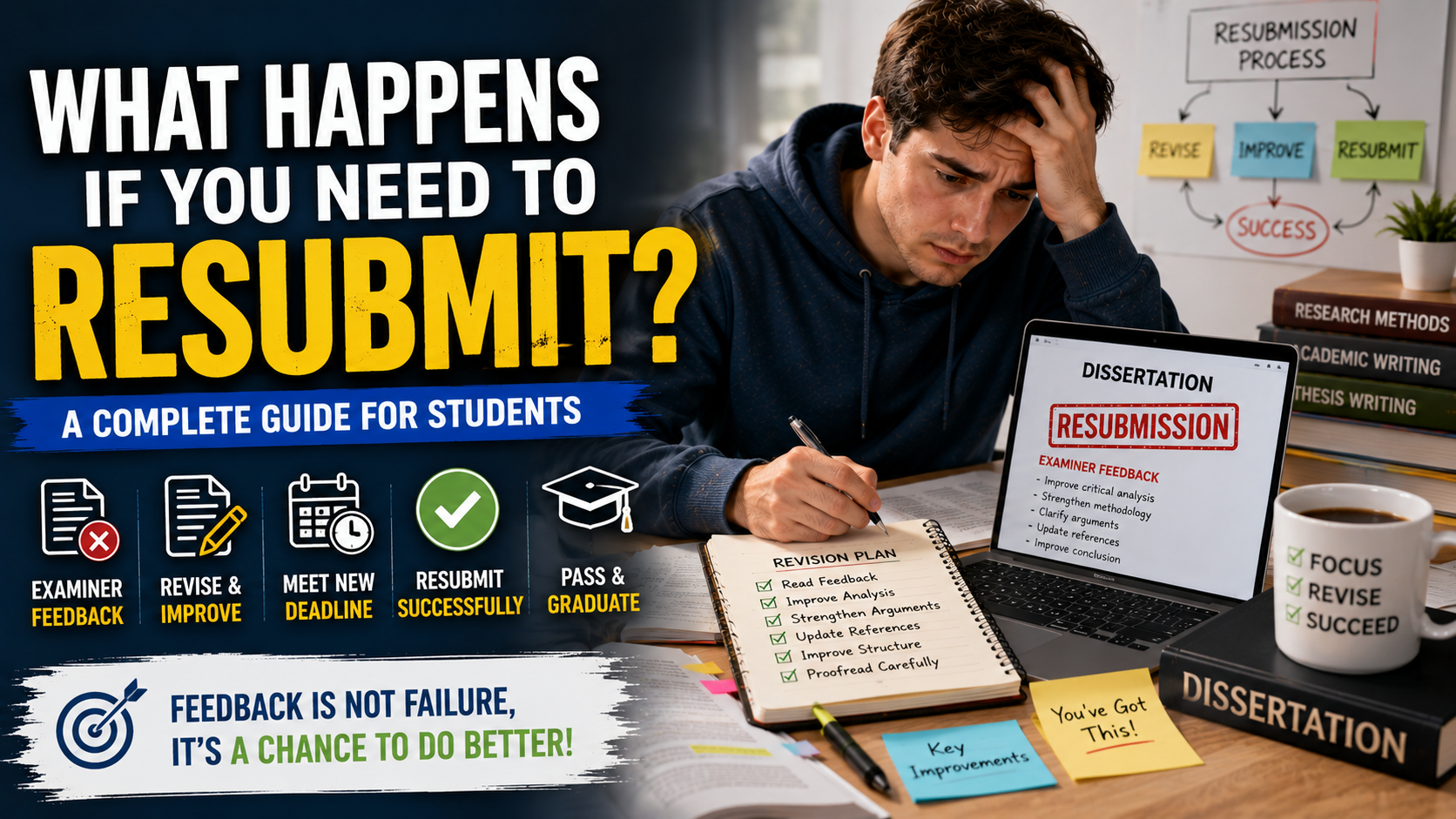
Thousands of students successfully complete their degrees after revising and resubmitting their dissertations. Understanding the resubmission process, university expectations, and effective revision strategies can significantly improve your chances of success.
What Does Dissertation Resubmission Mean?
A dissertation resubmission means your original submission did not fully satisfy the assessment criteria, but your university has allowed you another opportunity to revise and submit an improved version.
Depending on university regulations, you may need to:
Revise specific chapters.
Improve critical analysis.
Expand your literature review.
Strengthen your research methodology.
Correct referencing.
Rewrite sections of your discussion or conclusion.
Every university has its own assessment policies, so always review your institution's regulations carefully.
Why Do Students Need to Resubmit?
Common reasons include:
Weak research question.
Limited critical analysis.
Poor dissertation structure.
Inadequate literature review.
Insufficient data analysis.
Referencing errors.
Failure to answer research objectives.
Weak conclusions.
Failure to address supervisor feedback.
Academic writing issues.
In many cases, the research itself is valuable, but improvements are needed to meet academic standards.
What Happens After Receiving Your Results?
After receiving a resubmission decision, universities usually provide:
Examiner comments.
Marking feedback.
Required improvements.
Resubmission deadline.
Administrative guidance.
Read every comment carefully before beginning revisions.
Should You Feel Discouraged?
Not at all.
Many successful graduates have resubmitted dissertations.
Academic research is challenging, and universities recognise that students sometimes need additional time to demonstrate their abilities.
Treat resubmission as an opportunity rather than a failure.
Understanding Examiner Feedback
Examiner comments usually identify areas that require improvement.
Common feedback includes:
Improve Critical Analysis
Move beyond description by evaluating evidence.
Strengthen Arguments
Support every major claim with reliable academic sources.
Clarify Research Questions
Ensure your dissertation consistently answers its objectives.
Improve Structure
Make chapters flow logically.
Update References
Follow the required referencing style consistently.
Create a Revision Plan
Rather than editing randomly, organise your work systematically.
Example approach:
Week 1:
Read all feedback.
Highlight priorities.
Week 2:
Revise literature review.
Week 3:
Improve methodology.
Week 4:
Strengthen analysis.
Week 5:
Rewrite discussion.
Week 6:
Proofread and final checks.
Breaking revisions into smaller tasks makes the process more manageable.
Communicate With Your Supervisor
If university regulations allow, discuss examiner feedback with your supervisor.
Ask questions such as:
Which comments are highest priority?
Which chapters require the most revision?
Are additional sources recommended?
Does the research question need refinement?
Constructive guidance can prevent unnecessary revisions.
Improve More Than Grammar
Many students focus only on proofreading.
However, resubmissions usually require deeper improvements, including:
Better critical thinking.
Stronger evidence.
Improved methodology.
Clearer arguments.
Better organisation.
Surface editing alone rarely addresses examiner concerns.
Maintain Academic Integrity
Never attempt shortcuts during resubmission.
Always:
Cite sources accurately.
Use original writing.
Follow university AI policies.
Avoid plagiarism.
Keep research transparent.
Academic integrity remains essential during every stage of the dissertation process.
Before Resubmitting
Complete this checklist:
✔ Examiner feedback addressed
✔ Research objectives answered
✔ Literature updated
✔ Methodology strengthened
✔ Analysis improved
✔ Conclusions supported
✔ References checked
✔ Formatting completed
✔ Proofreading finished
Common Mistakes During Resubmission
Avoid:
Ignoring examiner comments.
Making only cosmetic edits.
Adding unnecessary content.
Changing research aims without justification.
Rushing revisions near the deadline.
Successful resubmissions focus on quality rather than quantity.
Final Thoughts
A dissertation resubmission can feel discouraging at first, but it is also a valuable opportunity to strengthen your research and demonstrate your academic abilities. Many students successfully complete their degrees after carefully addressing examiner feedback and improving key areas of their work. The most important step is to approach the process methodically rather than emotionally.
By creating a clear revision plan, focusing on substantive improvements, maintaining academic integrity, and using feedback as a roadmap rather than criticism, you can significantly increase your chances of success. A thoughtful resubmission not only helps you complete your degree but also develops valuable research, writing, and critical thinking skills that will benefit you throughout your academic and professional career.
Frequently Asked Questions
Everything you need to know about our services


