My Supervisor Isn't Replying—Now What?
Introduction
Waiting for your dissertation supervisor to respond can be frustrating. You've sent your draft, asked an important question, or requested feedback—and days or even weeks pass without a reply.
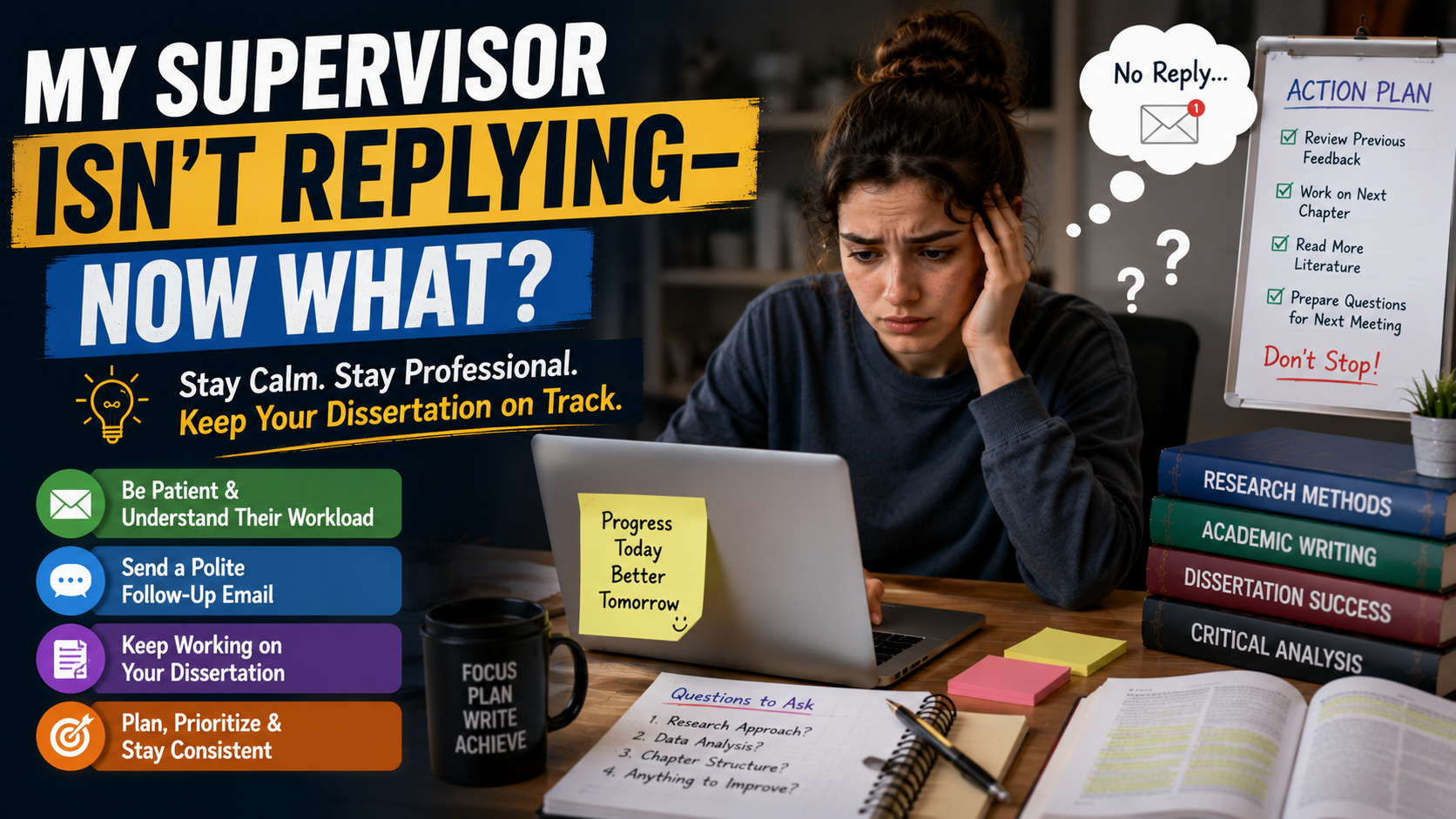
Many students immediately assume the worst:
"Have I done something wrong?"
"Will I miss my deadline?"
"How can I continue without feedback?"
While delayed responses can be stressful, they are not uncommon in higher education. Supervisors often balance teaching, research, administration, conferences, and supporting multiple students simultaneously.
The key is not to let waiting stop your progress. There are professional ways to follow up while continuing to move your dissertation forward.
Why Supervisors Sometimes Reply Late
A delayed response does not necessarily mean your supervisor is ignoring you.
Common reasons include:
Heavy teaching schedules.
Research commitments.
Conference travel.
Marking assessments.
University holidays.
Illness or personal leave.
Supervising many dissertation students.
Understanding these possibilities helps maintain perspective.
Check the Expected Response Time
Before sending another email, review:
Your dissertation handbook.
Department guidance.
Previous supervisor communications.
Some universities state that supervisors aim to respond within:
3–5 working days
5–10 working days
Up to two weeks during busy periods
Knowing official expectations helps determine when a follow-up is appropriate.
Send a Polite Follow-Up Email
If the expected response time has passed, send a short, professional reminder.
A good follow-up should:
Be polite.
Mention your previous email.
Briefly explain what you need.
Highlight any relevant deadline.
Thank them for their time.
Avoid sending multiple emails within a short period.
Professional communication helps maintain a positive working relationship.
Continue Working While You Wait
One of the biggest mistakes students make is stopping all progress.
Instead, continue tasks that don't require immediate supervisor input.
For example:
Read additional journal articles.
Improve your literature review.
Organise references.
Edit completed chapters.
Strengthen critical analysis.
Proofread existing work.
This ensures your dissertation continues moving forward.
Review Previous Feedback
Your supervisor has probably already provided valuable guidance.
Revisit earlier comments and ask yourself:
Have I addressed previous suggestions?
Can I improve my arguments further?
Are there recurring themes in the feedback?
Applying earlier advice often answers many current questions.
Discuss Issues With Your Department if Necessary
If your supervisor remains unavailable for an extended period and important deadlines are approaching, consult your department's procedures.
Possible contacts include:
Dissertation coordinator.
Programme leader.
Academic advisor.
Student support office.
This should generally be a last resort after reasonable attempts to communicate professionally.
Avoid Common Mistakes
Students sometimes react emotionally when communication slows.
Try to avoid:
Sending repeated emails every day.
Writing frustrated messages.
Contacting multiple staff members immediately.
Assuming your supervisor is intentionally ignoring you.
Pausing your dissertation completely.
Professionalism benefits everyone involved.
Create Your Own Progress Plan
Rather than waiting passively, establish weekly objectives.
For example:
Week Goals
Complete literature review section.
Edit methodology chapter.
Review references.
Prepare questions for next meeting.
Read five new journal articles.
This approach maintains momentum regardless of response times.
Prepare Better Questions
Supervisors can often respond more efficiently when questions are specific.
Instead of asking:
"Can you check everything?"
Try:
"Does my research question align with the methodology?"
or
"Would you recommend expanding Section 2.3 before I begin the discussion chapter?"
Focused questions usually receive clearer answers.
Know When to Escalate
If:
Several weeks pass without any response,
Multiple polite follow-ups receive no acknowledgement,
Important submission deadlines are approaching,
then follow your university's official academic support procedures.
Escalation should remain respectful and based on institutional guidance.
Academic Integrity Still Matters
Even if communication is delayed, continue working responsibly.
Remember to:
Cite every source accurately.
Follow your university's referencing style.
Use AI tools only within institutional guidelines.
Ensure all analysis and conclusions remain your own original academic work.
Good academic practice should continue regardless of supervisor availability.
Waiting Productively vs Waiting Passively
Productive Approach | Unproductive Approach |
|---|---|
Continue writing | Stop all work |
Improve previous chapters | Wait without making progress |
Read more literature | Constantly check email |
Organise references | Send repeated reminders |
Prepare focused questions | Become discouraged |
Final Thoughts
Delayed replies from a dissertation supervisor can feel worrying, but they do not have to bring your project to a standstill. Supervisors often manage numerous academic responsibilities, and occasional delays are a normal part of university life. The most effective response is to remain professional, continue making progress, and communicate respectfully when follow-up is appropriate.
By focusing on tasks within your control—such as refining your literature review, strengthening your analysis, organising your references, and preparing clear questions—you can keep your dissertation moving forward even while waiting for feedback. Consistent effort, patience, and proactive planning will help you maintain momentum and increase your confidence throughout the dissertation process.
Frequently Asked Questions
Everything you need to know about our services


