Dissertation Help

How Stress Affects Dissertation Quality

By AdminJuly 25, 202615 min read

Introduction

Writing a dissertation is one of the most demanding academic challenges students face. It requires months of research, critical thinking, data analysis, academic writing, and consistent self-discipline.

While a moderate level of stress can motivate students to meet deadlines, excessive stress often has the opposite effect. Instead of improving productivity, prolonged stress reduces concentration, affects decision-making, weakens critical analysis, and ultimately lowers dissertation quality.
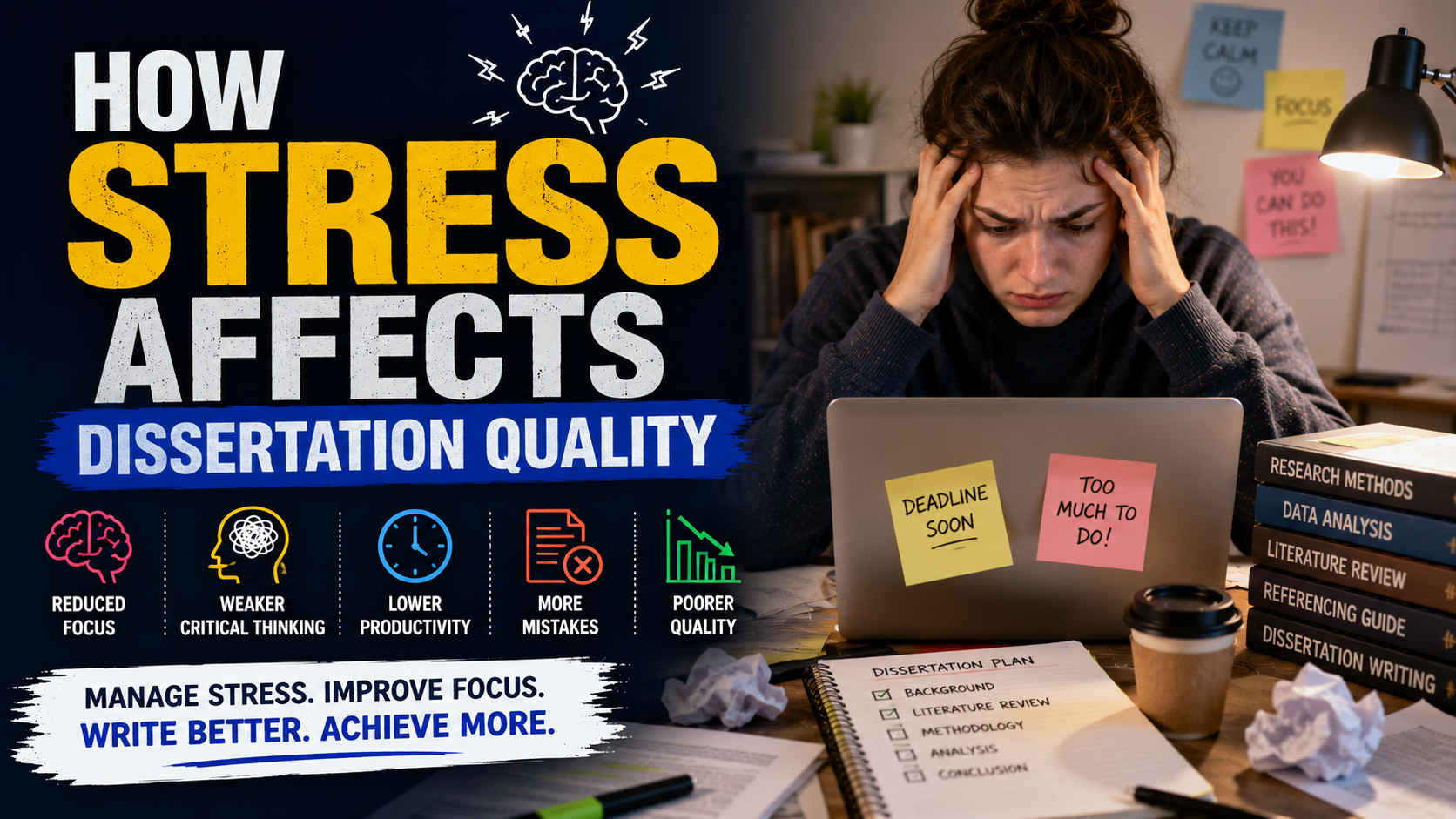
Many students focus on improving their research methods or writing skills but overlook one important factor—their mental wellbeing.

Understanding how stress affects dissertation quality can help you protect both your academic performance and your overall health.

Why Dissertation Stress Is So Common

Unlike regular assignments, dissertations involve long-term independent work.

Students often experience pressure because they must:

  • Conduct original research.

  • Meet strict university deadlines.

  • Balance multiple responsibilities.

  • Work with limited supervision.

  • Produce a high-quality academic document.

These challenges naturally increase stress levels.


Common Sources of Dissertation Stress

Students frequently report stress caused by:

  • Tight submission deadlines.

  • Fear of failure.

  • Perfectionism.

  • Writer's block.

  • Difficulty finding reliable research.

  • Supervisor expectations.

  • Time management problems.

  • Balancing work, family, and university commitments.

Often, several of these pressures occur simultaneously.


How Stress Affects Your Brain

When stress becomes chronic, the body produces increased levels of cortisol.

High cortisol levels can reduce:

  • Memory.

  • Focus.

  • Decision-making.

  • Creative thinking.

  • Problem-solving ability.

These cognitive functions are essential for producing a high-quality dissertation.


Reduced Critical Thinking

Strong dissertations require students to:

  • Evaluate evidence.

  • Compare viewpoints.

  • Challenge assumptions.

  • Develop original arguments.

Stress makes this process more difficult.

Instead of analysing deeply, stressed students often:

  • Accept information without questioning it.

  • Write descriptive rather than analytical content.

  • Avoid complex discussions.

As a result, dissertations may lose depth and originality.


Lower Writing Quality

Stress frequently affects writing itself.

Students may notice:

  • Repetitive sentences.

  • Poor organisation.

  • Grammar mistakes.

  • Weak transitions.

  • Less coherent arguments.

Even students with strong academic abilities can produce lower-quality writing when under significant stress.


Poor Concentration

One of the earliest signs of excessive stress is reduced concentration.

Students may:

  • Read the same paragraph repeatedly.

  • Forget ideas while writing.

  • Lose track of their argument.

  • Spend hours making little progress.

This creates frustration, which increases stress further.


Increased Procrastination

Contrary to popular belief, procrastination is often a response to stress rather than laziness.

Students delay writing because beginning the dissertation feels emotionally overwhelming.

Instead they may:

  • Organise files repeatedly.

  • Search for unnecessary sources.

  • Check emails.

  • Watch productivity videos.

These activities feel productive while avoiding the real task.


More Mistakes During Proofreading

Stress reduces attention to detail.

As deadlines approach, students are more likely to miss:

  • Spelling mistakes.

  • Incorrect references.

  • Formatting errors.

  • Missing citations.

  • Numbering inconsistencies.

Fresh, rested proofreading sessions are usually much more effective.


Weaker Decision-Making

Dissertation writing involves hundreds of decisions.

Students must choose:

  • Research questions.

  • Methodologies.

  • Sources.

  • Data analysis techniques.

  • Arguments.

  • Conclusions.

Stress increases decision fatigue, making even simple choices feel overwhelming.


Reduced Creativity

Dissertations often require original thinking.

Stress narrows attention and encourages students to focus only on immediate problems.

This makes it harder to:

  • Generate new ideas.

  • Develop innovative arguments.

  • Connect different theories.

  • Think critically.


Physical Effects of Stress

Academic stress also affects physical health.

Students commonly experience:

  • Headaches.

  • Muscle tension.

  • Poor sleep.

  • Fatigue.

  • Reduced energy.

  • Increased illness.

Poor physical health further reduces academic performance.


How Stress Creates a Negative Cycle

The cycle often looks like this:

Stress increases →

Concentration decreases →

Writing slows →

Deadline pressure grows →

Stress increases again.

Breaking this cycle early is much easier than waiting until deadlines become critical.


Practical Strategies to Reduce Dissertation Stress

Break the Dissertation Into Smaller Tasks

Instead of focusing on:

"Finish my dissertation."

Focus on:

  • Write 300 words.

  • Edit one section.

  • Read one article.

  • Update one reference.

Small tasks reduce mental overload.


Create a Realistic Schedule

Avoid unrealistic daily goals.

Instead:

  • Set achievable writing targets.

  • Include breaks.

  • Plan revision time.

  • Leave time for unexpected problems.

Consistency matters more than intensity.


Prioritise Sleep

Sleep improves:

  • Memory.

  • Concentration.

  • Creativity.

  • Decision-making.

Late-night writing sessions often produce lower-quality work.


Exercise Regularly

Light exercise reduces cortisol and improves mood.

Even a short daily walk can improve focus and productivity.


Stop Chasing Perfection

No dissertation is perfect.

Aim for:

  • Clear arguments.

  • Strong evidence.

  • Logical structure.

  • Continuous improvement.

Progress is more valuable than perfection.


Ask for Support

If you're struggling:

  • Speak with your supervisor.

  • Use university academic support services.

  • Discuss concerns with classmates.

  • Seek professional wellbeing support if needed.

You do not have to manage dissertation stress alone.


Healthy Stress vs Harmful Stress

Healthy Stress

Harmful Stress

Motivates action

Causes avoidance

Improves focus

Reduces concentration

Encourages planning

Creates panic

Supports productivity

Leads to burnout

Temporary

Long-lasting


Final Thoughts

Stress is an unavoidable part of dissertation writing, but it should never become the factor that determines the quality of your research. While a small amount of pressure can encourage productivity, prolonged stress affects concentration, critical thinking, creativity, and decision-making—all of which are essential for producing excellent academic work.

Recognising the signs of excessive stress early allows you to take practical action before it affects your dissertation. By managing your workload, maintaining healthy routines, seeking support when needed, and focusing on steady progress rather than perfection, you can protect both your wellbeing and your academic performance. A well-managed mind often produces stronger research than a stressed one.

Frequently Asked Questions

Everything you need to know about our services

Related Posts