How Often Should You Meet Your Dissertation Supervisor?
Introduction
One of the most common questions students ask during their dissertation journey is:
"How often should I meet my dissertation supervisor?"
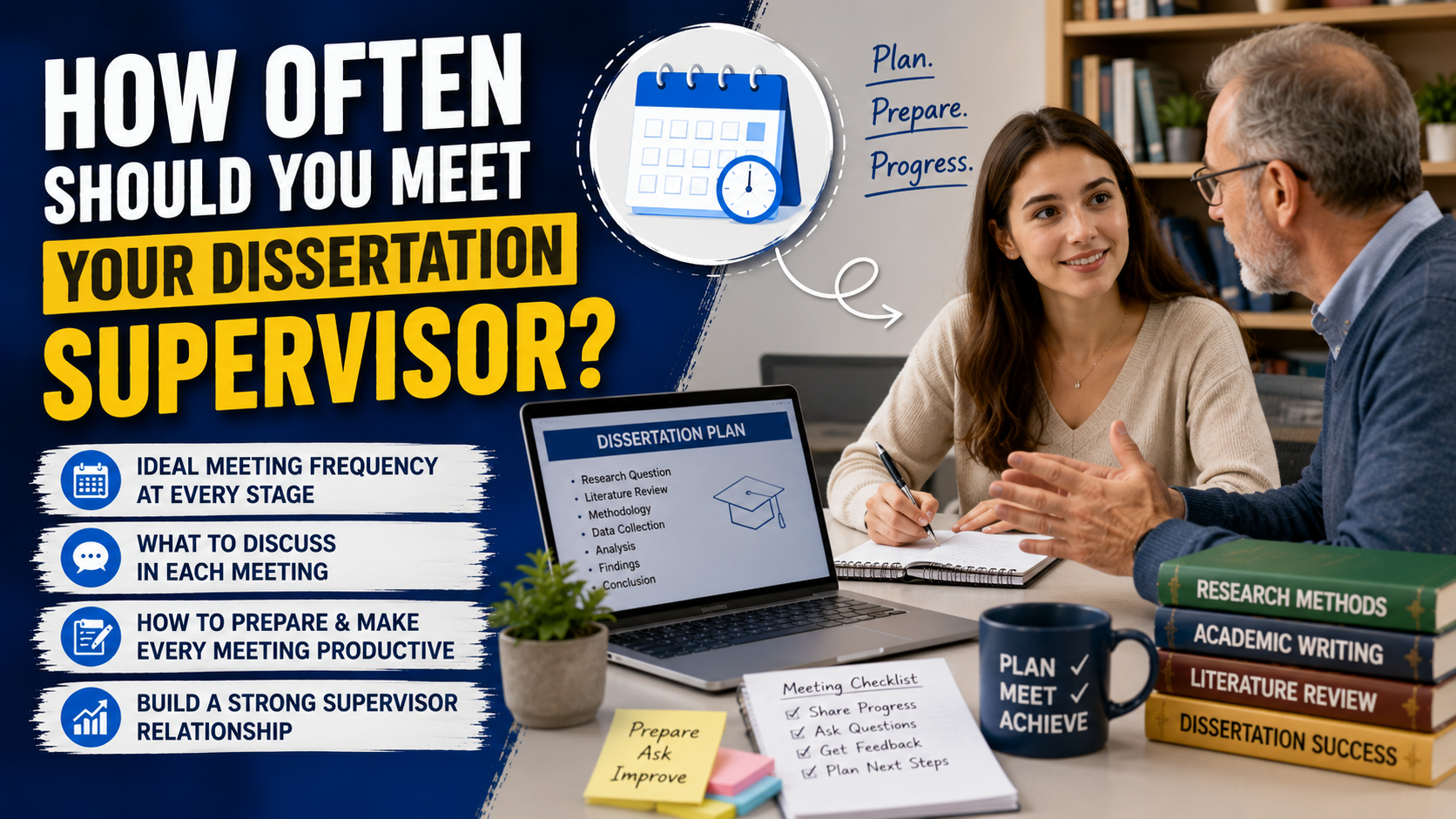
Some students meet their supervisors every week. Others only have a few meetings throughout the entire project. This often leaves students wondering whether they are meeting too often—or not often enough.
The truth is that there is no universal schedule. The ideal meeting frequency depends on your university's guidelines, your stage of research, your supervisor's availability, and the complexity of your dissertation.
Rather than focusing on the number of meetings, it's more important to ensure that each meeting has a clear purpose and helps move your project forward.
This guide explains how often you should meet your dissertation supervisor, what to discuss at each stage, and how to make every meeting as productive as possible.
Does Every University Have the Same Meeting Schedule?
No.
Universities have different supervision policies.
Some institutions require:
Weekly meetings.
Fortnightly meetings.
Monthly meetings.
A minimum number of supervision sessions.
Always check:
Your dissertation handbook.
Department guidelines.
Module handbook.
University regulations.
These documents usually outline the expected level of supervision.
Typical Meeting Frequency
Although requirements vary, many students follow a schedule similar to this:
Dissertation Stage | Suggested Meeting Frequency |
|---|---|
Topic selection | Weekly or fortnightly |
Proposal development | Every 2 weeks |
Literature review | Every 2–4 weeks |
Methodology planning | Every 2–3 weeks |
Data collection | Monthly or as needed |
Data analysis | Every 2–3 weeks |
Writing chapters | Every 2–4 weeks |
Final revisions | Weekly before submission if available |
Remember that these are general guidelines rather than fixed rules.
Meet More Frequently at the Beginning
Early meetings are particularly valuable because they help you:
Define your research question.
Narrow your topic.
Choose an appropriate methodology.
Plan your timetable.
Avoid major mistakes later.
A strong start often reduces problems during later stages of the dissertation.
Reduce Meetings During Independent Research
Once your research is underway, you may need fewer meetings.
This stage often involves:
Reading journal articles.
Collecting data.
Conducting interviews.
Running surveys.
Analysing results.
Most of this work requires independent study.
Instead of requesting meetings frequently, update your supervisor when you have meaningful progress to discuss.
Increase Meetings Before Submission
As your submission deadline approaches, additional meetings can be helpful.
Common topics include:
Chapter feedback.
Structure.
Discussion.
Conclusions.
Referencing.
Final revisions.
Supervisors often have busy schedules near submission deadlines, so book appointments early.
Don't Meet Without Preparation
A meeting without preparation often wastes valuable supervision time.
Before every meeting:
Review previous feedback.
Prepare questions.
Update your progress.
Identify challenges.
Send requested drafts in advance.
Preparation leads to more useful discussions.
Bring Specific Questions
Avoid asking:
"Is everything okay?"
Instead ask:
Does my literature review answer the research question?
Is my methodology justified?
Does my discussion demonstrate enough critical analysis?
Are my findings presented clearly?
Specific questions usually produce more practical feedback.
Keep a Record of Every Meeting
After each meeting, note:
Supervisor recommendations.
Deadlines.
Required revisions.
Agreed actions.
Next meeting date.
Keeping written notes prevents misunderstandings later.
Respect Your Supervisor's Time
Supervisors often support many students simultaneously.
Help meetings run smoothly by:
Arriving on time.
Sending drafts before meetings.
Following previous advice.
Avoiding repeated questions already discussed.
Cancelling early if necessary.
Professional communication builds a positive working relationship.
What If Your Supervisor Is Difficult to Contact?
Sometimes supervisors:
Reply slowly.
Have limited availability.
Travel for research.
Teach multiple courses.
If this happens:
Book meetings well in advance.
Send concise emails.
Combine several questions into one message.
Continue working independently where possible.
Waiting for every reply can delay your progress unnecessarily.
Signs You're Meeting Too Often
Too many meetings may indicate over-dependence.
Warning signs include:
Asking for approval before every decision.
Requesting feedback after minor edits.
Avoiding independent thinking.
Waiting for meetings before making progress.
Dissertation work should gradually become more independent.
Signs You're Not Meeting Enough
Too few meetings may also create problems.
Possible indicators include:
Feeling uncertain about your direction.
Repeating the same mistakes.
Missing deadlines.
Ignoring supervisor feedback.
Working for months without guidance.
Regular communication helps identify issues before they become difficult to fix.
Academic Integrity During Supervision
Supervisors guide your research but do not write your dissertation.
Always ensure that:
Your ideas remain your own.
Sources are cited accurately.
AI tools are used only where permitted by university policies.
Academic integrity is maintained throughout the research process.
The final dissertation should demonstrate your independent research abilities.
Productive vs Unproductive Meetings
Productive Meeting | Unproductive Meeting |
|---|---|
Clear agenda | No preparation |
Specific questions | General conversation |
Progress update | No recent work |
Action plan | No follow-up |
Written notes | Forgetting recommendations |
Final Thoughts
There is no perfect number of meetings with a dissertation supervisor, but consistent and purposeful communication is essential for a successful research project. Early meetings help establish a strong foundation, while regular check-ins throughout the dissertation provide valuable guidance, identify potential issues, and keep your work on track.
Rather than focusing on meeting as often as possible, aim to make every supervision session productive. Prepare thoroughly, ask focused questions, act on previous feedback, and maintain professional communication. By balancing independent research with effective supervision, you can make steady progress and submit a dissertation that reflects both academic quality and your own critical thinking.
Frequently Asked Questions
Everything you need to know about our services