Coursework Help for McMaster University Students: A Responsible Academic Support Guide
Introduction
University coursework can involve much more than attending lectures and completing exams. Students may need to manage readings, assignments, research papers, lab reports, presentations, problem sets and ongoing assessments while developing independent learning skills.
When coursework becomes challenging, seeking support can be a positive step. The important distinction is that academic support should help students develop their knowledge and skills—not complete assessed coursework for submission as their own.
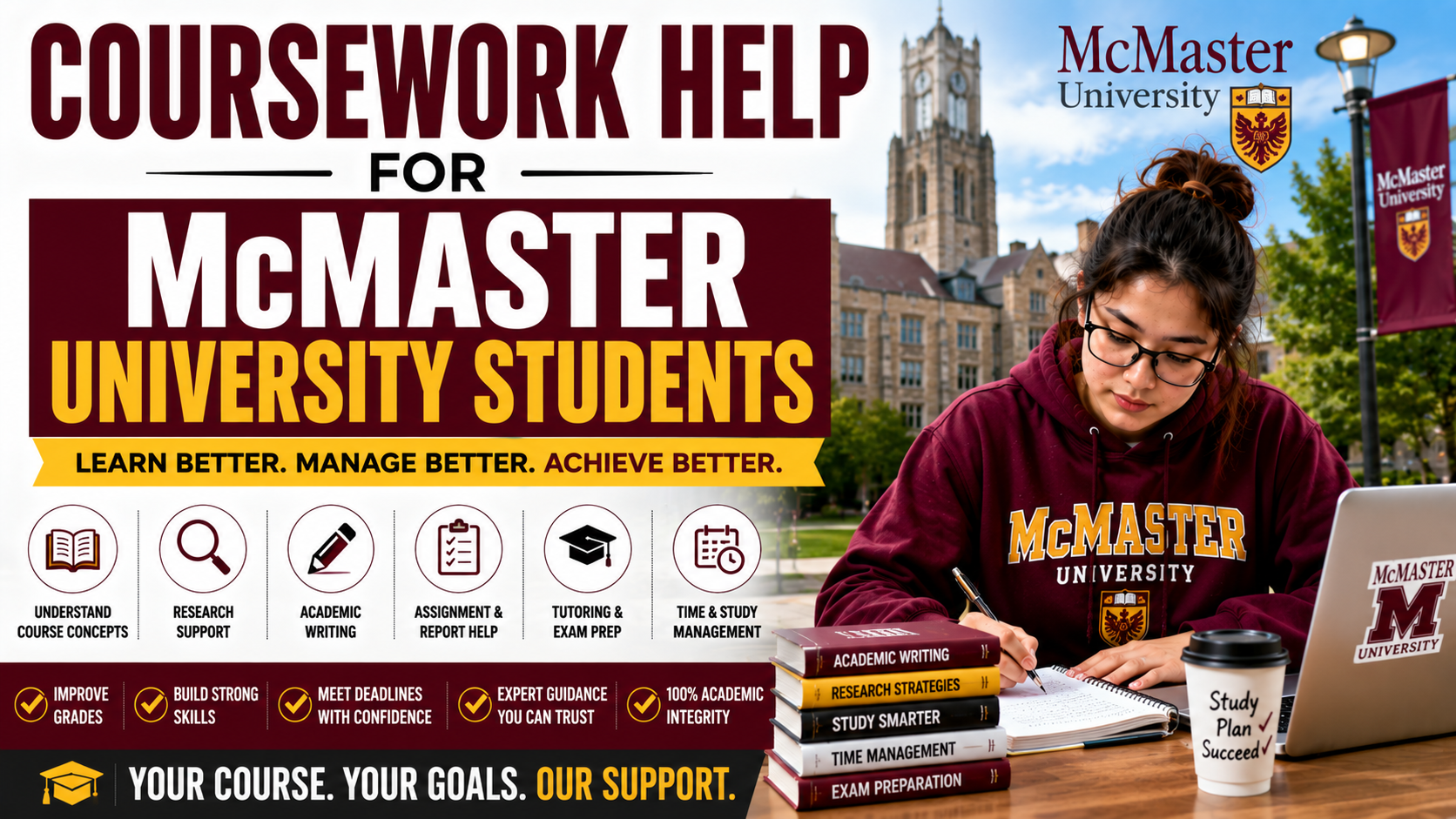
Coursework help for McMaster University students can include legitimate support with understanding course concepts, academic writing, research skills, study strategies, time management, tutoring and feedback on students' own work. Students should remain responsible for completing assessed work and follow their course-specific and University academic-integrity requirements.
McMaster University's Student Success Centre provides writing and academic skills support, one-on-one appointments and course-specific tutoring resources designed to help students strengthen their learning and academic skills.
What Is Coursework Help?
Coursework help is educational support that helps students understand course material, develop academic skills and improve their own work without replacing their intellectual contribution or completing assessed work on their behalf.
Depending on the course and assessment requirements, responsible support may include:
Understanding coursework requirements
Developing study strategies
Research guidance
Academic writing development
Essay planning
Time management
Citation and referencing guidance
Tutoring for course concepts
Feedback on existing work
Self-editing strategies
Preparing for assessments
The type of support permitted may vary depending on the instructor, course and specific assessment.
What Academic Support Is Available at McMaster University?
McMaster's Student Success Centre offers resources and services focused on helping students develop writing, academic and learning skills. Support includes writing advising, academic skills appointments, coaching and tutoring opportunities.
Students may seek support with areas such as:
Writing assignments
Study planning
Time management
Note-taking
Reading critically
Academic writing
Learning strategies
Understanding course concepts
McMaster's academic skills resources are designed to support skill development across different stages of university study.
Can McMaster Students Get Help With Coursework?
Yes. McMaster students can seek legitimate academic support to improve their understanding and skills. However, students should not submit work completed by another person as their own.
A useful principle is:
Coursework support should help you learn how to do the work—not do the assessed work for you.
If you are unsure whether a particular type of assistance is allowed, consult your instructor before using it.
McMaster's Office of Academic Integrity also directs students with questions about responsible academic practices and available support resources to appropriate University services.
How Can Writing Support Help With Coursework?
Academic writing is an important part of coursework in many disciplines. Students may need to write essays, reports, reflections, research papers or other assignments that require clear communication and well-supported arguments.
McMaster's writing advisors can support students at different stages of the writing process, including planning, organisation, academic style and reviewing prepared documents. The University's writing support is designed to guide students in improving their own writing rather than functioning as an editing service.
Academic Writing Support Can Help Students Develop:
Essay structure
Paragraph organisation
Academic style
Clarity
Evidence integration
Documentation practices
Self-editing skills
Writing confidence
McMaster explicitly notes that its writing advisors guide students to improve their own writing rather than edit their work for them.
How Can Students Get Help Understanding Course Concepts?
Students sometimes struggle not because of writing but because they need more time to understand course material.
McMaster's Undergrad Peer Tutoring Network connects students with trained upper-year tutors who have successfully completed the courses they tutor. This can provide an opportunity to review course concepts and develop a stronger understanding of the material.
Responsible tutoring may involve:
Explaining difficult concepts
Reviewing course material
Discussing problem-solving approaches
Working through practice examples
Developing study strategies
Students should still complete their own assessments according to course requirements.
What Is Coursework Research Help?
Research help supports students in developing the skills needed to find, evaluate and use information effectively.
Research guidance may help students learn how to:
Identify key concepts
Develop search terms
Find scholarly sources
Evaluate source credibility
Read academic research critically
Organise research notes
Integrate evidence into their writing
A practical research workflow is:
Understand the Topic → Identify Key Concepts → Search for Sources → Evaluate Evidence → Read Critically → Take Notes → Organise Research → Write
Students should remain responsible for reading, interpreting and accurately representing the sources they use.
Can Coursework Help Include Study and Time-Management Support?
Yes. Academic skills support can help students develop effective learning habits and manage competing coursework responsibilities.
McMaster's Student Success Centre provides academic mentoring and coaching focused on skills and strategies such as studying, time management, assignment planning and developing realistic action plans.
Students Can Work on Skills Such As:
Creating study schedules
Managing deadlines
Reducing procrastination
Improving note-taking
Preparing for tests
Building consistent study habits
Planning large assignments
A realistic plan can make a large coursework workload more manageable.
A Practical Coursework Workflow for McMaster Students
Students can approach coursework using a structured process:
Step 1: Understand the Requirements
Review the:
Course outline
Assignment instructions
Marking criteria
Submission requirements
Deadlines
Step 2: Break the Work Into Smaller Tasks
For example:
Read → Research → Plan → Draft → Revise → Self-Edit → Submit
Step 3: Start Early
Starting earlier gives students time to identify problems and seek appropriate support.
Step 4: Seek Permitted Guidance
Use instructors, teaching assistants, tutors, writing advisors and official academic-support resources when needed.
Step 5: Complete Your Own Work
The final academic work and intellectual contribution should remain the student's responsibility.
What Is the Difference Between Tutoring, Writing Support and Editing?
Different types of support have different purposes.
Type of Support | Primary Purpose |
|---|---|
Tutoring | Helps students understand course concepts |
Academic coaching | Helps develop learning and study strategies |
Writing support | Helps students develop writing skills |
Research guidance | Helps students improve research skills |
Self-editing guidance | Helps students improve their own drafts |
Feedback | Identifies areas students can consider improving |
McMaster's Writing and Academic Skills services emphasise helping students identify areas for improvement and develop strategies rather than simply fixing coursework for them.
Can McMaster Students Get Help With Citations and Referencing?
Students can seek guidance to understand:
Citation styles
In-text citations
Reference lists
Quoting
Paraphrasing
Source attribution
However, students remain responsible for ensuring that their sources are genuine, accurately represented and correctly cited.
Good referencing practices help students distinguish between their own ideas and information obtained from other sources.
Can McMaster Students Use AI for Coursework Help?
AI use depends on the expectations established for the course and assessment.
McMaster's Office of Academic Integrity advises students who have questions or doubts about whether they should use generative AI to contact their course instructor for clarification.
Before using AI for coursework, students should check:
Course instructions
Assessment requirements
Instructor guidance
Applicable academic-integrity expectations
AI Use Checklist
I understand my instructor's expectations.
I have checked whether AI use is permitted.
I am following assessment-specific instructions.
I have verified all information independently.
My submitted work reflects my own learning and contribution.
When in doubt, ask your course instructor before using AI.
What Should McMaster Students Avoid?
Students should avoid services or practices that:
Complete assessed coursework for submission
Encourage plagiarism
Impersonate students
Fabricate research data
Invent references
Misrepresent authorship
Offer guaranteed grades
Provide unauthorised answers
Request University passwords
The safest approach is to use support that helps students learn and improve rather than outsourcing their assessed work.
How Can International Students Get Coursework Support?
International and multilingual students may seek academic support while adapting to:
Canadian academic expectations
Academic writing conventions
Independent learning
Referencing practices
University coursework structures
McMaster's Student Success Centre provides writing and academic skills services and additional support resources for students across the University community.
Appropriate support can help students build confidence and develop skills while maintaining ownership of their academic work.
How Should Students Use Feedback on Coursework?
Feedback can be one of the most useful tools for academic improvement.
A Practical Feedback Process
1. Read the Feedback Carefully
Avoid making immediate assumptions about what a comment means.
2. Categorise the Feedback
Group comments into areas such as:
Content
Research
Analysis
Structure
Writing
Referencing
3. Identify Patterns
Repeated feedback can highlight skills that deserve additional attention.
4. Seek Guidance if Needed
Writing advisors and academic-support services can help students understand strategies for improving their skills.
5. Make Your Own Revisions
Students remain responsible for deciding how to revise their work and completing those revisions themselves.
Coursework Help Checklist for McMaster Students
Before seeking academic support, consider the following:
Understanding
I understand the coursework requirements.
I have reviewed the marking criteria.
I know what I am expected to demonstrate.
Research and Learning
I understand the course concepts involved.
I have used appropriate sources where required.
I can explain the work I am completing.
Academic Integrity
The work I submit is my own.
I have cited sources appropriately.
I have followed assessment instructions.
I have checked the rules for AI use.
I understand what assistance is permitted.
Final Review
I have addressed relevant feedback.
I have reviewed my structure and argument.
I have checked formatting requirements.
I have proofread my work.
I have followed submission instructions.
When Should Students Seek Coursework Help?
Students should ideally seek appropriate support before a deadline becomes urgent.
Early support can help students:
Understand coursework expectations
Develop stronger learning strategies
Improve research planning
Build writing skills
Make meaningful revisions
Reduce last-minute pressure
A practical workflow is:
Understand → Plan → Learn → Research → Draft → Seek Permitted Guidance → Revise → Self-Edit → Submit
Can Coursework Help Guarantee Better Grades?
No. Legitimate academic-support services cannot guarantee a particular grade or academic outcome.
Academic results depend on factors including:
Understanding of course material
Quality of research
Critical thinking
Assignment requirements
Assessment criteria
The student's own work and performance
Academic support can help students develop skills, but it cannot ethically guarantee results.
Final Thoughts
Coursework is an important part of university learning because it helps students develop subject knowledge, research abilities, critical thinking and communication skills. Seeking help can be valuable when the support is focused on learning rather than replacing the student's work.
Coursework help for McMaster University students can include responsible support with academic writing, research, tutoring, study strategies, time management and self-editing. Students should follow course-specific requirements, maintain academic integrity and remain responsible for their own ideas and submitted work.
The strongest approach combines:
Independent learning
Official McMaster University resources
Instructor and teaching assistant guidance
Responsible tutoring and writing support
Careful revision and self-editing
Understand → Learn → Research → Write → Seek Guidance → Revise → Submit
By using legitimate academic support to strengthen their skills, McMaster University students can navigate challenging coursework while maintaining academic integrity and ownership of their learning.
Frequently Asked Questions
Everything you need to know about our services
Related Posts

Coursework Help for University of Alberta Students

Coursework Editing Services for Postgraduate Students in New Zealand
