Assignment Format for College Students
Introduction
Writing assignments is an essential part of college life. Whether you're preparing a research paper, essay, case study, or project report, following the correct assignment format can significantly improve your grades. A well-structured assignment demonstrates professionalism, improves readability, and helps professors evaluate your work more effectively.
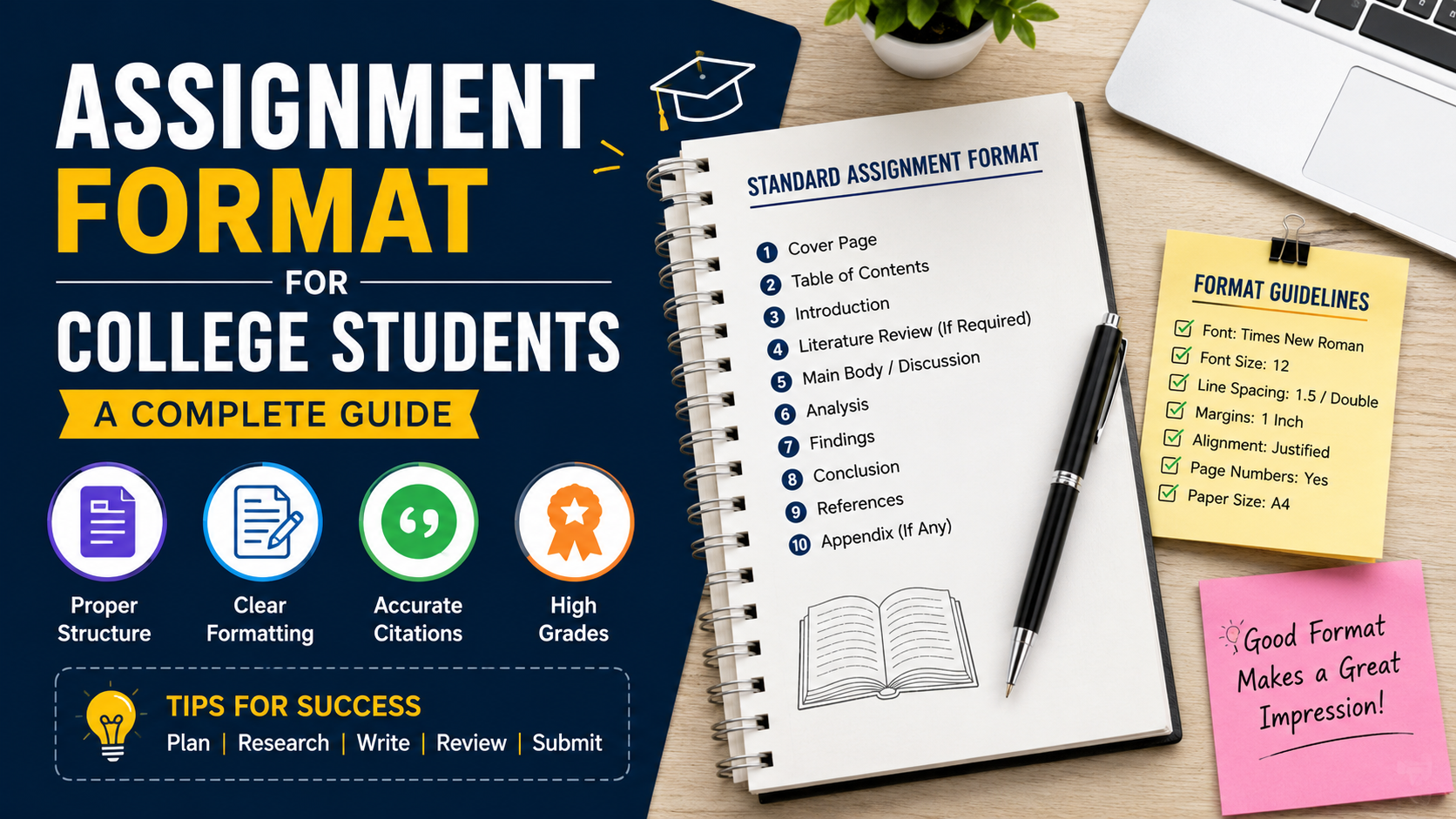
In this guide, you'll learn the standard assignment format for college students, formatting rules, writing tips, and common mistakes to avoid.
Why Does Assignment Format Matter?
Many students focus entirely on the content while overlooking the presentation. However, formatting plays a vital role because it:
-
Makes your work easy to read
-
Demonstrates academic professionalism
-
Helps organize ideas logically
-
Improves overall presentation
-
Reduces the chances of losing marks due to formatting errors
Even an excellent assignment can receive lower grades if it lacks proper formatting.
Standard Assignment Format for College Students
Most colleges follow a similar structure for assignments. Unless your instructor provides specific guidelines, use the following format.
1. Cover Page (Title Page)
The cover page should include:
-
Assignment title
-
Student name
-
Student ID
-
Course name
-
Subject code
-
Instructor's name
-
Department
-
College or University name
-
Submission date
Keep the cover page clean and professional.
2. Table of Contents
For assignments longer than five pages, include a table of contents.
It should list:
-
Introduction
-
Main headings
-
Subheadings
-
Conclusion
-
References
-
Appendices (if any)
Use automatic table generation in Microsoft Word or Google Docs whenever possible.
3. Introduction
The introduction gives readers an overview of your assignment.
Include:
-
Background information
-
Purpose of the assignment
-
Research objectives
-
Scope of the topic
Keep it concise while clearly introducing the subject.
4. Main Body
The main body contains the core discussion.
Organize it into logical sections using headings and subheadings.
Each section should:
-
Explain one idea
-
Include supporting evidence
-
Present examples
-
Reference reliable sources
Avoid writing large blocks of text. Short paragraphs improve readability.
5. Conclusion
The conclusion summarizes your key findings.
It should:
-
Restate the objective
-
Summarize important points
-
Avoid introducing new information
-
Provide final insights or recommendations
A strong conclusion leaves a positive impression on the reader.
6. References
Always cite the sources used in your assignment.
Common citation styles include:
-
APA
-
MLA
-
Harvard
-
Chicago
-
IEEE
Follow the citation style required by your instructor.
7. Appendix (Optional)
If your assignment includes additional materials such as:
-
Survey questionnaires
-
Charts
-
Tables
-
Interview transcripts
-
Large images
Include them in the appendix rather than the main body.
Standard Formatting Guidelines
Most colleges recommend the following formatting rules.
Always verify your instructor's requirements before submission.
Assignment Structure Example
A typical assignment follows this order:
-
Cover Page
-
Table of Contents
-
Introduction
-
Literature Review (if required)
-
Main Discussion
-
Analysis
-
Findings
-
Conclusion
-
References
-
Appendix
This structure works well for most college assignments.
Tips for Writing a High-Quality Assignment
Understand the Topic
Read the assignment question carefully before starting.
Conduct Proper Research
Use credible academic sources like:
-
Books
-
Journals
-
Government publications
-
University websites
Avoid relying solely on blogs or random websites.
Create an Outline
Planning your headings first makes writing easier and improves flow.
Use Clear Language
Write simple, professional sentences.
Avoid unnecessary jargon and complicated vocabulary.
Proofread Before Submission
Always check for:
-
Grammar mistakes
-
Spelling errors
-
Formatting inconsistencies
-
Citation errors
Proofreading can improve your final grade.
Common Assignment Formatting Mistakes
Many students lose marks because they:
-
Skip the cover page
-
Use inconsistent fonts
-
Forget page numbers
-
Ignore citation rules
-
Write extremely long paragraphs
-
Copy content without referencing
-
Submit assignments with grammar mistakes
Avoiding these errors can make your assignment look more professional.
Best Tools for Assignment Writing
Several tools can improve your writing quality.
-
Microsoft Word
-
Google Docs
-
Grammarly
-
Zotero
-
Mendeley
-
Turnitin (for plagiarism checking)
-
ChatGPT (for brainstorming and editing)
These tools help improve grammar, formatting, citations, and organization.
Final Thoughts
Following the correct assignment format is just as important as writing quality content. A properly structured assignment enhances readability, demonstrates professionalism, and increases your chances of achieving higher grades. By using a clear structure, maintaining consistent formatting, citing sources correctly, and proofreading your work before submission, you can create assignments that meet academic standards and leave a strong impression on your instructors.
Frequently Asked Questions
Everything you need to know about our services


